We remember: A seat, a silence and the boys lost to war – the story behind Ōhinerau/Mt Hobson WWII memorial
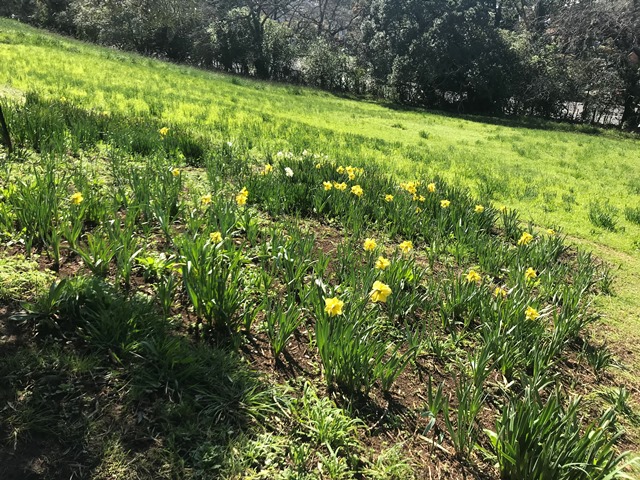

Daffodils on WW2 memorial site on Ohinerau Mt Hobson 2020
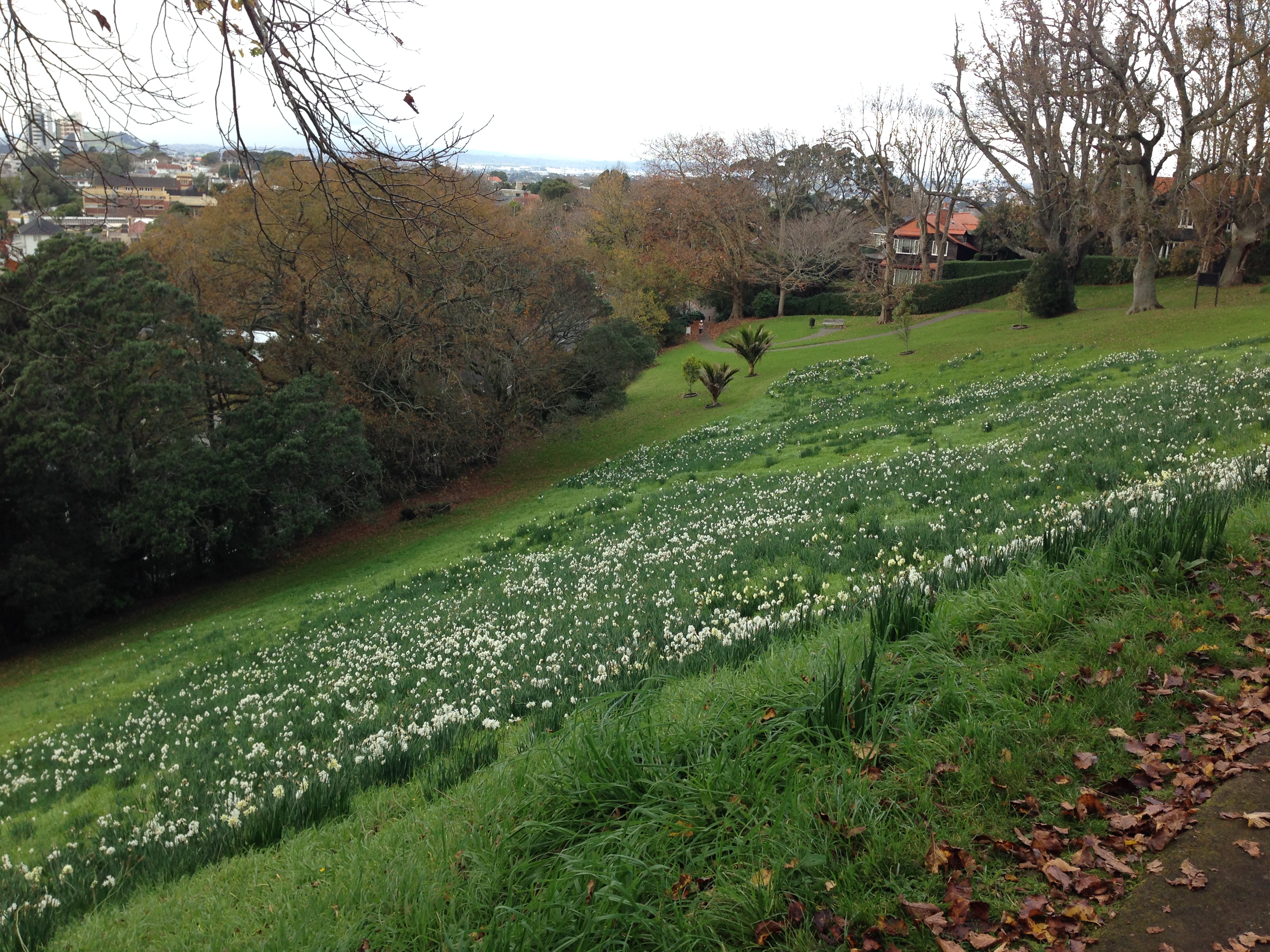
The commemorative seat on the side of Ōhinerau/Mt Hobson looks out over a bed of daffodils, across rooftops, and out to the Hauraki Gulf beyond. A plaque pays tribute to the “boys who played on the slopes of this mountain and who made the supreme sacrifice in World War II”
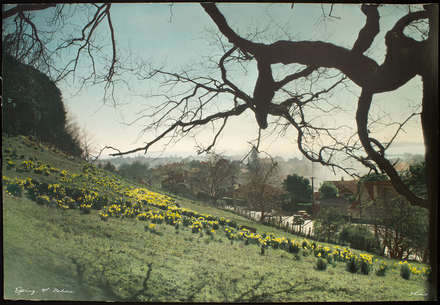
Mt-Hobson-in-spring-Whites-Aviation-Hand-coloured-print-PH-1960-1-5-Auckland Museum.
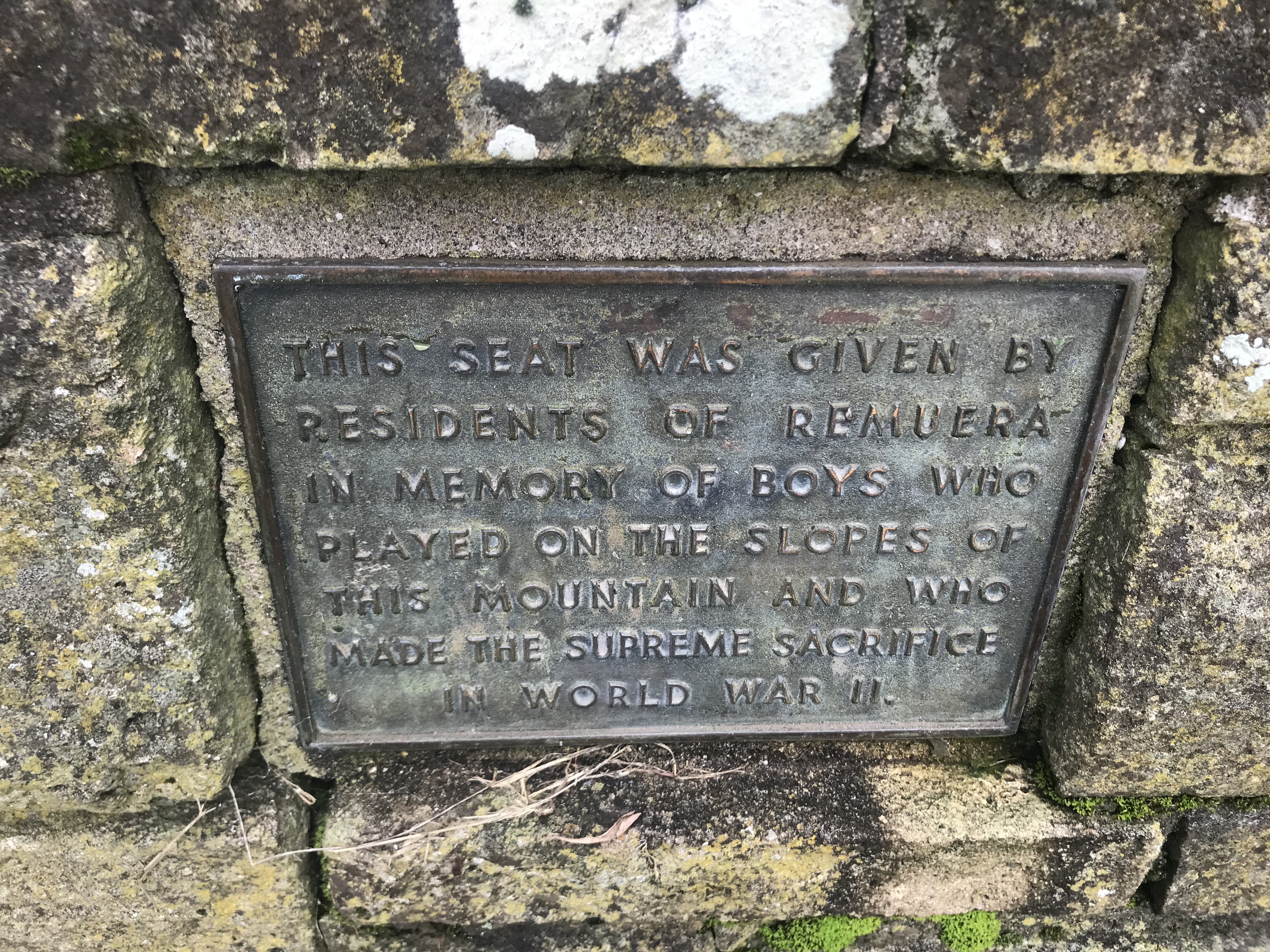
Ohinerau WW2 memorial plaque
There are no names. No faces. But on a still day, when the traffic below has thinned, the sound of kids from the nearby primary school rises up the slopes and it’s easy to imagine a bunch of boys charging through the long grass before the war began.
Author Angela Caughey (née Wilson) can still see them now – the ones who came home and the many who didn’t. The names come to mind easily; at 96 she’s been living with their memory for a long time.
Caughey was born in 1930 during the Depression, the youngest of five; Pete (christened Warwick) was the eldest, then Ian, Keith and Elizabeth.
“The three boys had one bedroom, and it was a colossal scene of thumps and bumps as they wrestled and played ping pong and fought and teased each other. Everything was threadbare and beaten up and mum just left them to it.
“I remember them disappearing to play on Mount Hobson, they wore nothing but their school uniforms. Everyone was so hard up. They didn’t have outside clothes, just uniform and bare feet.”
The Wilson boys called their littlest sister ‘Bubby’ and involved her in all the rough and tumble. She laughs at the memory of them dropping her accidentally onto the asphalt at home, chipping her front teeth.
“Don’t worry Bubby, they said, you’ll be getting new ones soon. It was the most wonderful upbringing…it was so tough and muscular and pain didn’t mean anything to me.”
The boys went to King’s School, just a few hundred metres from the paths that lead you up Ōhinerau, a terraced pa site once fortified by palisades (tūwatawata) and where the deep defensive trenches were a magnet to boys from surrounding streets.
There was David and ‘Bill’ Abbott, who had a pigeon loft in the attic at home and had made connections and friends across New Zealand through his racing birds. Their mother was Angela’s godmother.
Arthur (‘Bill’ to everyone) and Bruce Johns lived just round the corner in Bassett Rd and were often at the Wilson home.
Further across the slopes were the two Lewis boys, Robert and younger brother William, known to all as Radcliffe.
“Even as a young girl, you knew he had a twinkle in his eye,” Caughey says. “He was great fun, hilarious. He became a fighter pilot, harem scarem even as a kid.”
There was “seven-foot-tall Ian McKenzie”, who was taken prisoner by the Japanese and came home “weighing about six stone”.
The Mowbray boys in Dilworth Ave…John and Pat Towle in Dromorne Rd…the Ewen boys…Richard Darling, just a few doors up from the Wilsons…the list goes on.
“It was a very close-knit community. It wasn’t the big sprawling suburb it is now,” Caughey says. “And then I remember them becoming young men and everyone wore the same thing, grey trousers turned up at the bottom, an office shirt and jacket, very ordinary sort of jacket, but they could express their personalities with their ties, and they had sort of garish ties with bright patterns on the front.”
Pete, 13 years Caughey’s senior, was working at a law firm in the city when war broke out.
“[He] put his name down immediately, but they had so many people wanting to join the Air Force that he wasn’t called up. One day dad went down to get the morning Herald and there was a white feather in the letter box. Someone was accusing Pete of being a coward for not being in uniform. I remember coming into the kitchen and there they were looking at this white feather and mum wasn’t going to touch it. She got the kitchen tongs and picked it up and put it into the incinerator.”
Pete was eventually called up into the RNZAF and posted to Levin for training. Ian was desperate to follow but because of the long wait list chose the Navy’s Fleet Air Arm.
The two brothers left New Zealand within three weeks of each other in mid-1941.
By then, Keith had enlisted in the Army and would be part of the 2nd NZEF’s campaign in Italy.
“The whole house was empty of boys and it rattled, it was awful,” Caughey says. “Elizabeth and I shifted into their bedroom and I just remember mum was…delicate. She had a bad heart and I remember her sitting up in bed every morning…and I sat on her corsets in the grandmother chair in the bedroom and she chatted to me about all sorts of things, and I learned a lot. She told me about their friends who’d committed suicide together, a husband and wife, and I can’t remember what else, but certainly we were exposed to life with a capital ‘L’. It wasn’t dramatic, it was just quietly absorbed.”
Athol Foster’s family lived at the foot of Ōhinerau. He was older than most of the boys and the first casualty. He was flight training out of Hobsonville Air Base in July of 1941 when his plane crashed at Riverhead. Foster died just 16km from home.
In April 1942, the Wilsons were next to receive terrible news. Pete, the pilot of a Wellington bomber, had been killed in action after being shot down on a night raid over northern Germany. He was just 25.
Pete’s diaries survive, among the piles of research material and mementoes in the study of Caughey’s care unit not too far from Ōhinerau.
“He goes from being bored because the weather is bad and they’re not flying much to swearing, ‘God, not Hamburg again, God, not Essen again. Doesn’t the Air Force know we can’t keep this up. We’re going out seven nights out of 12. I can’t carry on’.
“He was reaching the stage where he could feel himself cracking up and he mentions one or two others who’d actually stopped flying. I hadn’t read his diary all through until fairly recently, but it hammered me with the fact that each time they went out, they knew they wouldn’t come back.”
In June of ’42, Robert Douglas Lewis was killed, in accidental circumstances that more than 80 years on, almost make you weep.
He and others from RAF 209 Squadron went swimming at a beach just south-west of Alexandria in Egypt. They found what they thought was a metal float, took it back to camp, where it exploded, killing Lewis and six others.
In July, Flight Sergeant Arthur Grahame (GRAHAME) Johns was killed over Hamburg. He and the other pilot of their Wellington bomber were found in the wreckage, the body of another crewman was in a nearby tree. Two others lay in an open field.
In August, the Wellington bomber Richard Maxwell Darling was a navigator on, failed to return from a night raid over Germany. He was 28.
In March of 1944, Chisholm Martyn (MARTYN) Wilson was on night patrol in his Mosquito fighter/bomber over the English Channel.
“He followed an enemy aircraft over the sea towards the French coast, and failed to return to base. In consequence he was classified as missing…as no trace of either the aircraft or crew was found, he was presumed to have lost his life at sea without trace.”
The report comes from the RNZAF’s Biographies of Deceased Personnel 1939-1945.
There is a similar description for Alan William Wilson, of Christchurch, who was the navigator on board that plane.
The bound volumes contain common themes about the airmen; normally they’d clocked around 300-400 flight hours, mostly training, often no more than 20 combat missions, and at the foot of yellowed pages, acknowledgement of a parent witness. It’s stark.
In August of 1944, William Radcliffe Lewis was flying his Mitchell aircraft on a bombing run over Clermont in France when engine failure forced the plane into the sea. He died of severe injuries while waiting to be rescued. Two other New Zealanders died in the crash.
Two weeks later, fighter pilot William Gibbs Abbott, who had provided air cover over Normandy on D-Day, was shot down near Apeldoorn in the Netherlands.
The boy captivated by flight, who raced pigeons across New Zealand, is the last of the friends on the mountain killed in action.
At home, Caughey played silent witness to the loss.
“When they went away to war, mum got their photos and had them lined up on the mantelpiece, at one stage Keith realised that he and Ian were the only two left of all those boys who went off to war.”
It’s Ian’s story that has consumed Angela more than any.
In May of 1944, he was reported missing, presumed dead over Germany.
“Suddenly I was plunged into being fully up to here in grief at what I’d been denied at what those boys might have been. But it was so universal. Everyone had someone who had been killed. It turned me from being a chatter box to being a very reserved young woman, it altered me completely.”
It would be 72 years before Ian’s remains were located, in a cemetery in Plouguerneau, France.
The daffodils on Ōhinerau were first planted in 1948 to honour the boys on the mountain. In recent years, under a new management authority, they had been mown over before they could bloom, but there has been a reprieve and a smaller cluster bursts into flower each year.
In 2018, Angela was able to make a pilgrimage to Germany and France where Pete and Ian are buried.
“We picked daffodils to lay on each brother’s grave, and we took a couple of stones from Mount Hobson to put on the graves and stones from Pete’s grave in Germany and put them on Ian’s grave…so the brothers were united through Mount Hobson and that was a great achievement.”
“And I sort of feel at peace because they’re together.”
“One man who he’d met in the Fleet Air Arm was Amyas (AMYAS) Ringer. He didn’t get in touch with my family for 40 years. He couldn’t bear to talk about it. He hadn’t been flying with Ian the night he was killed, but he’d known him since the beginning. But that was the effect of the war on him. He felt for the Wilson family very much, but he didn’t have the strength within himself to approach us.”
The sculpture that spells out the motto “Virtus Pollet” in the reception area at King’s School is embossed with the name of every student since opening day in 1922.
It’s easy to spot the names of Ian Wilson, Bill Abbott, Bill Johns.
The school’s archivist Shannon Billimore has carefully created a photo folder of as many of the boys who played up on the mountain as she can find.
For the first time since the war, they are together again, as if on the mantelpiece at home at 112 Remuera Rd. The first is Ian, in his Form IIB class of 1928, his legs dangling over the bench seat, front row, far right. Unmistakable to the little sister who has endured.
“ Oh, there he is. He was my favourite brother, you shouldn’t have a favourite, but he and I had dark hair and freckles and the other three had blonde hair and smooth skins.
“And Ian taught me how to box. I was about five and he put the boxing gloves on my hands and he bobbed around in front of me and said, ‘Now Bubby, keep your left hand up for guard and you punch with your right’. So we did that for a couple of minutes and I ended up giving him a blood nose.”
The Remuera village of Angela’s childhood has largely disappeared. She remembers the end of the war, when those garish ties returned.
“You glowed when you saw young men in civvies. It was lovely to see them back in the city.
“You remembered those who were missing…you looked for them…and they weren’t there.”
“[But] Mt Hobson…it’s just always there, and you know how the Māori have something that’s always there, their maunga, well Mt Hobson’s my maunga.”
Subscribe to our newsletter to keep up to date.

 Share
Share 
 Email
Email By Andrew Hay, New Zealand Listener· 24 April, 2026, as narrated by Angela Caughey.

