St Cuthbert’s Heritage Walk


Sarah Padey, Archivist at St Cuthbert’s College in Epsom, guided Remuera Heritage members on a heritage tour of the school buildings and grounds.
Principal Charlotte Avery welcomed us and spoke about the history of the buildings.
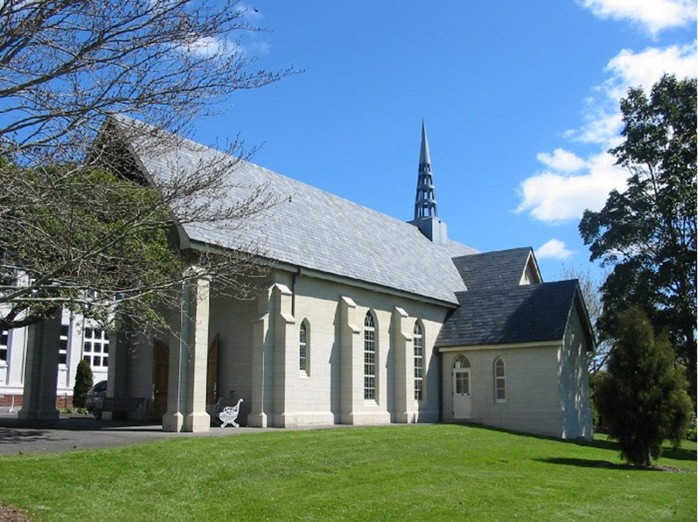
The Old Girls Chapel
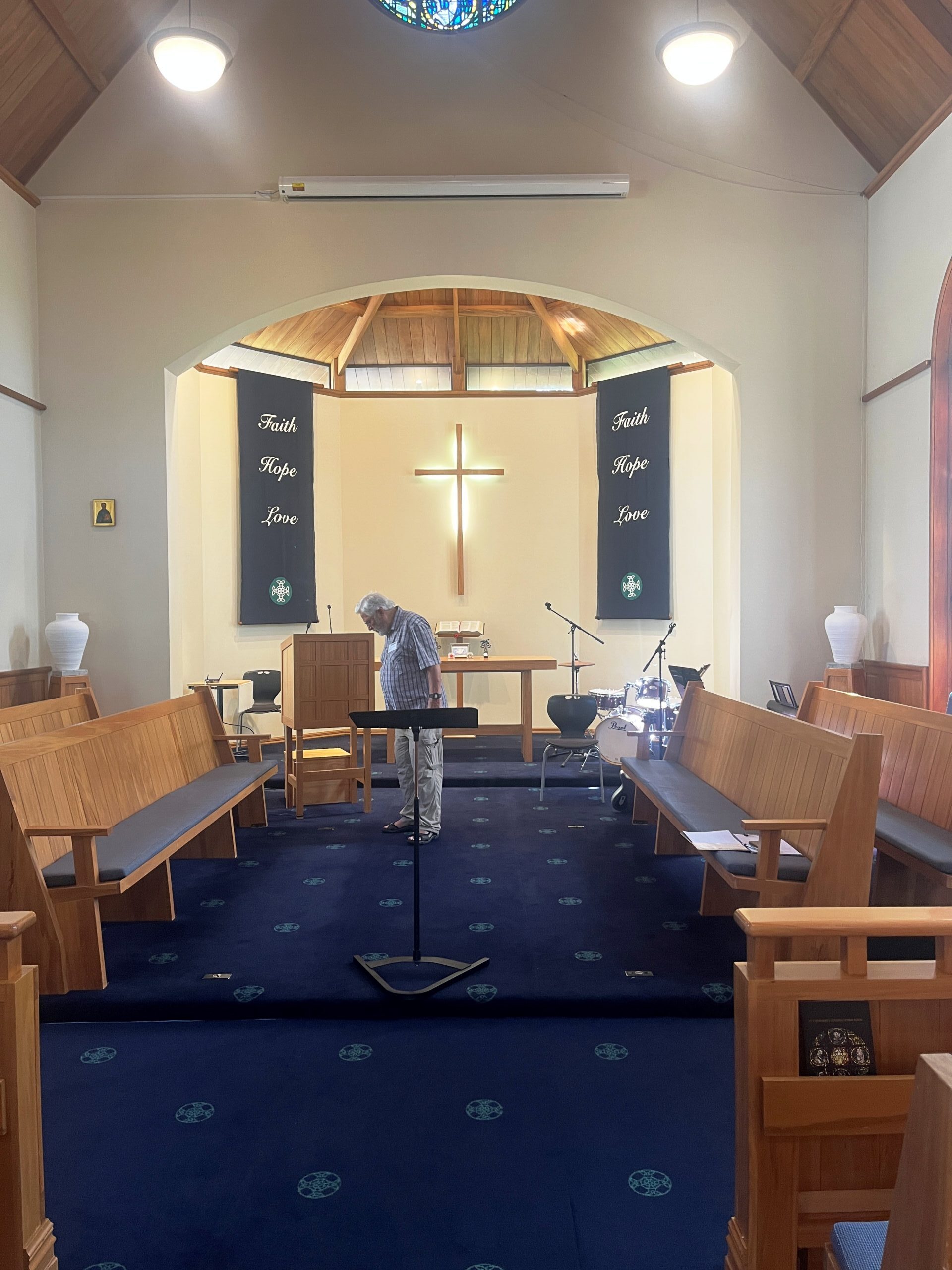
St Cuthbert's Chapel
We met in the Old Girls Chapel, which was built out of Hinuera stone with a slate roof, and the interior finished using rimu. The Old Girls Association had decided to mark their Association’s 75th anniversary by building a chapel for the College in 1993.
Money was raised for the 13 stained-glass windows that feature in the Chapel. Beverley Shore Bennett designed the windows with their Celtic and New Zealand motifs. Stephen Belanger-Taylor created the stained glass. The foyer windows depict images of angels holding aloft the words of the biblical foundation – faith, hope and love – on which the College is formed.
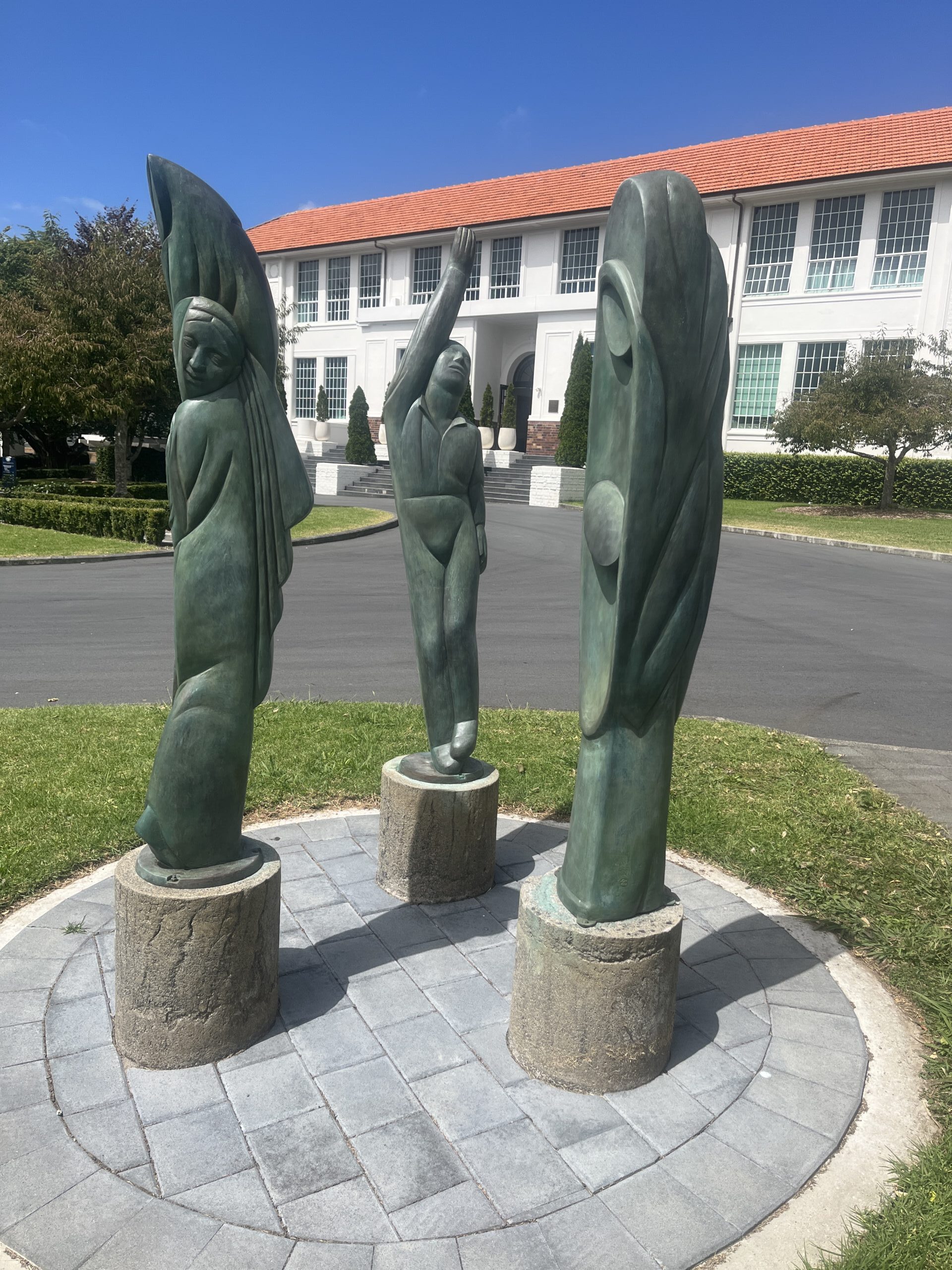
St Cuthbert's Terry Stringer sculpture
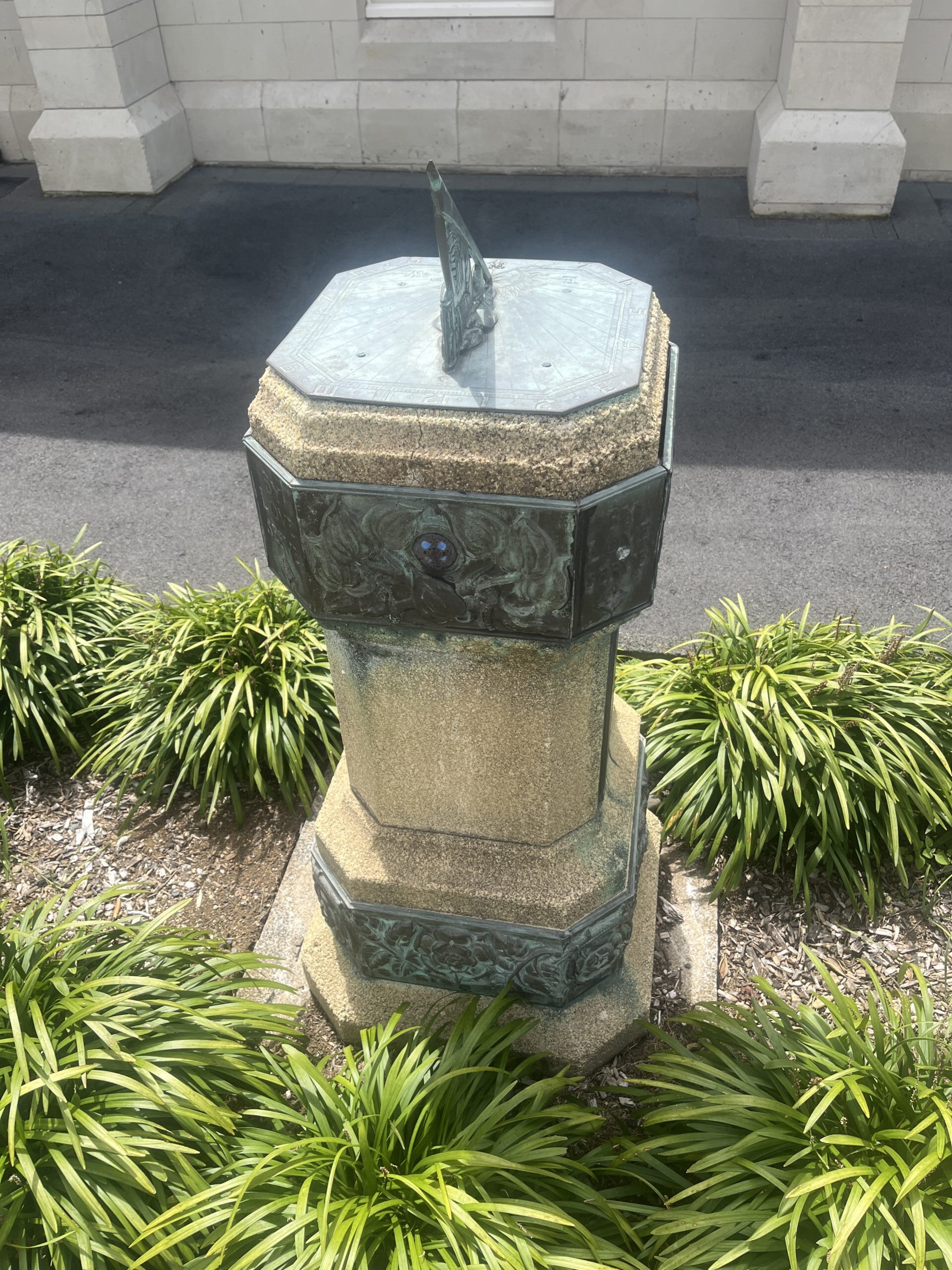
St Cuths Sundial
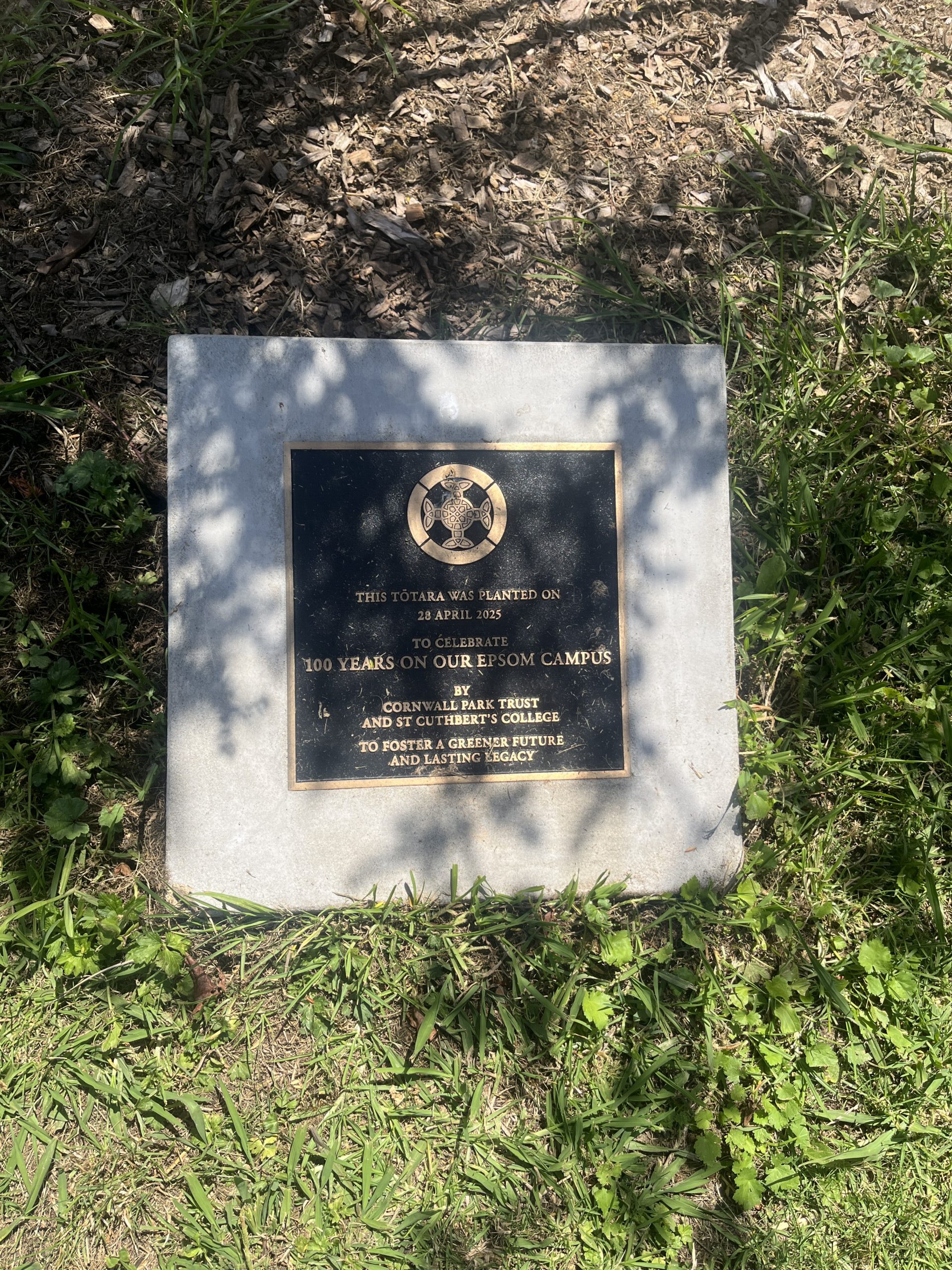
St Cuthbert's 100th anniversary totara
Beside the Chapel is the 100th Anniversary Totara, which was gifted by the Cornwall Park Trust Board on 28th April 2025 “to foster a “greener future and a lasting legacy”.
Also near the Chapel is the sundial, donated by Elizabeth Chambers, who was both a pupil and a teacher.
From the Chapel, we walked to the Terry Stringer sculpture Faith Hope & Love, commissioned by the Old Girls Association in 2002.
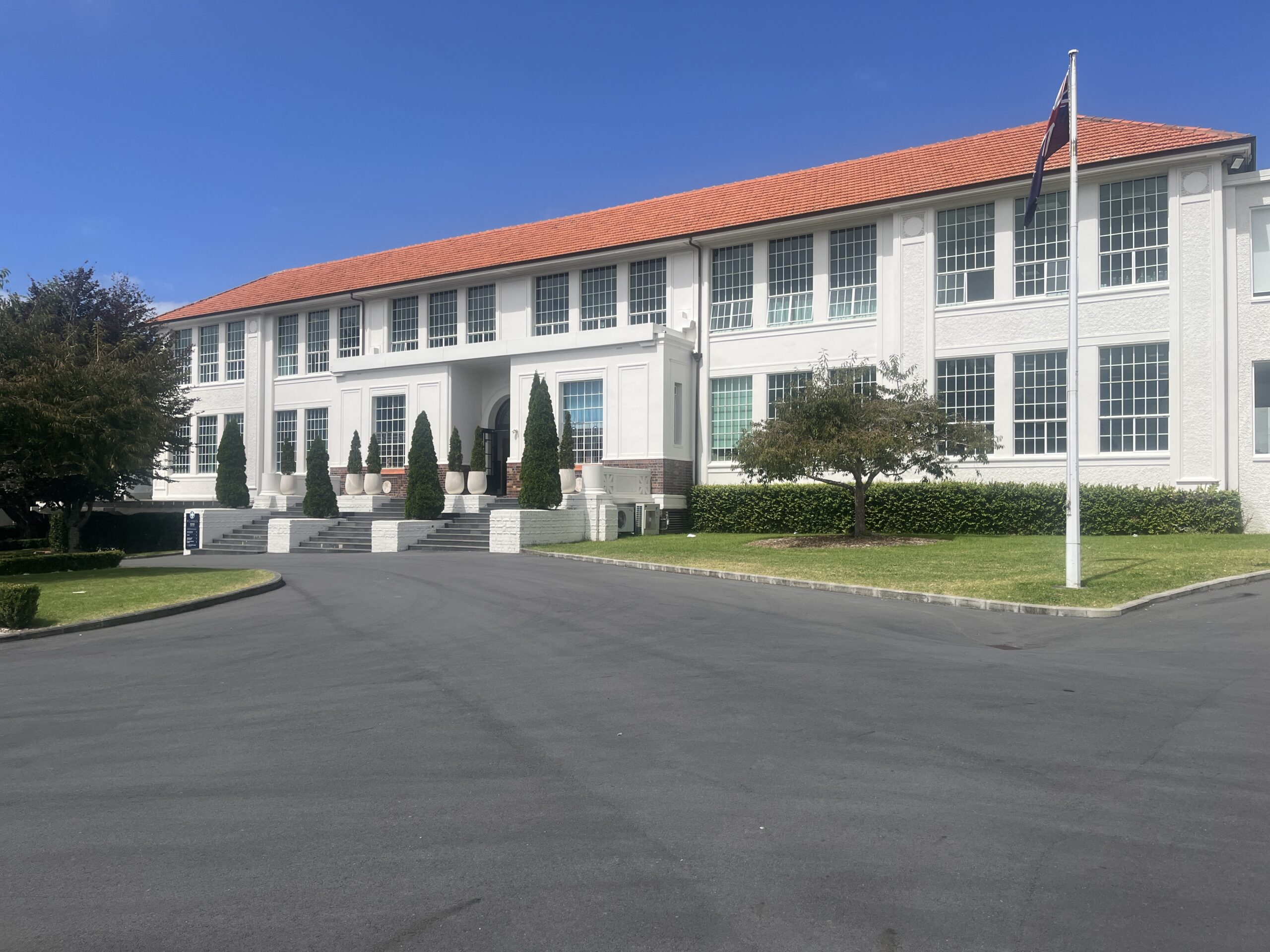
St Cuthbert's Robertson Building

Robertson Building St Cuthberts College
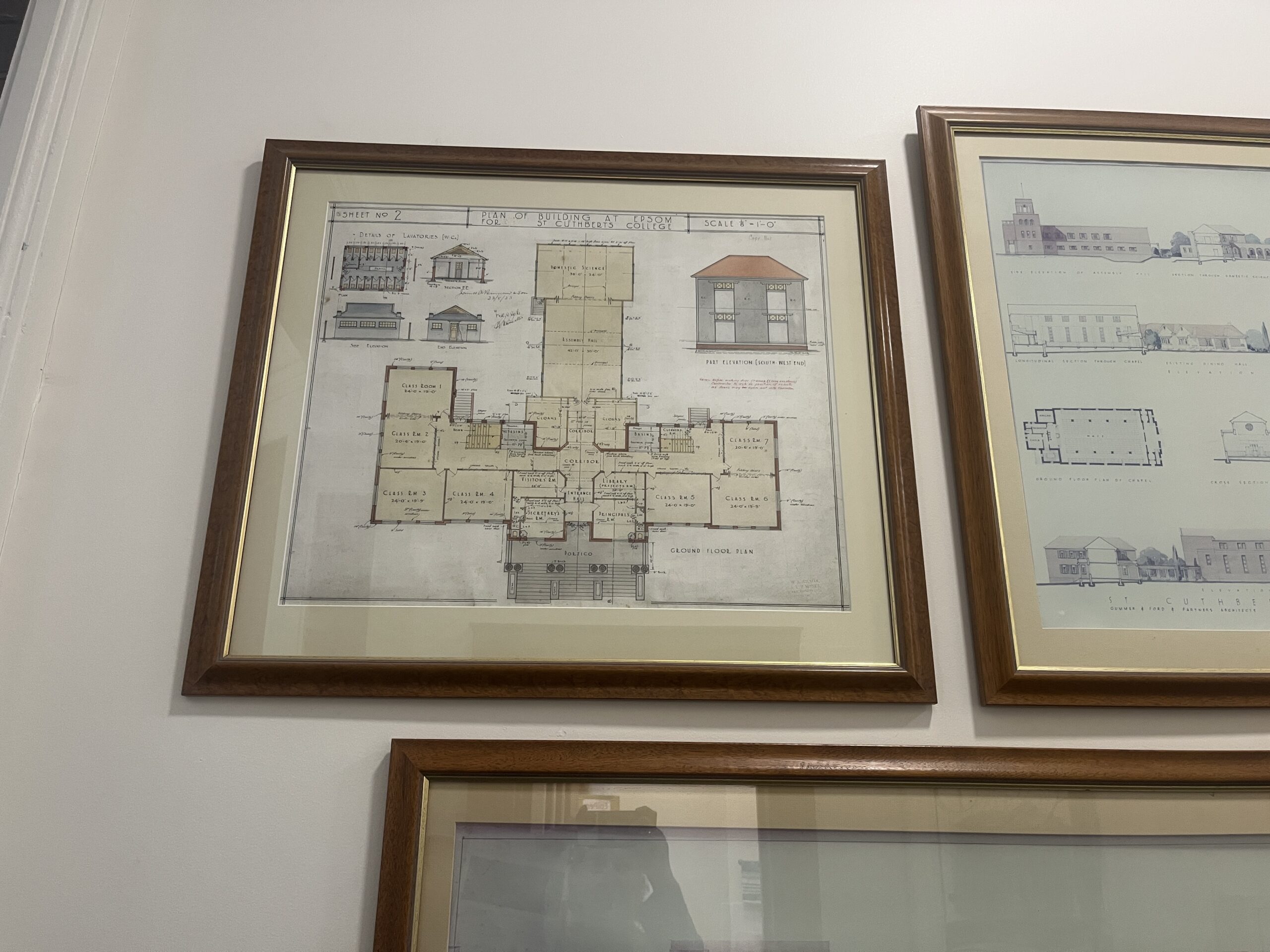
St Cuthbert's drawings by Gummer & Ford
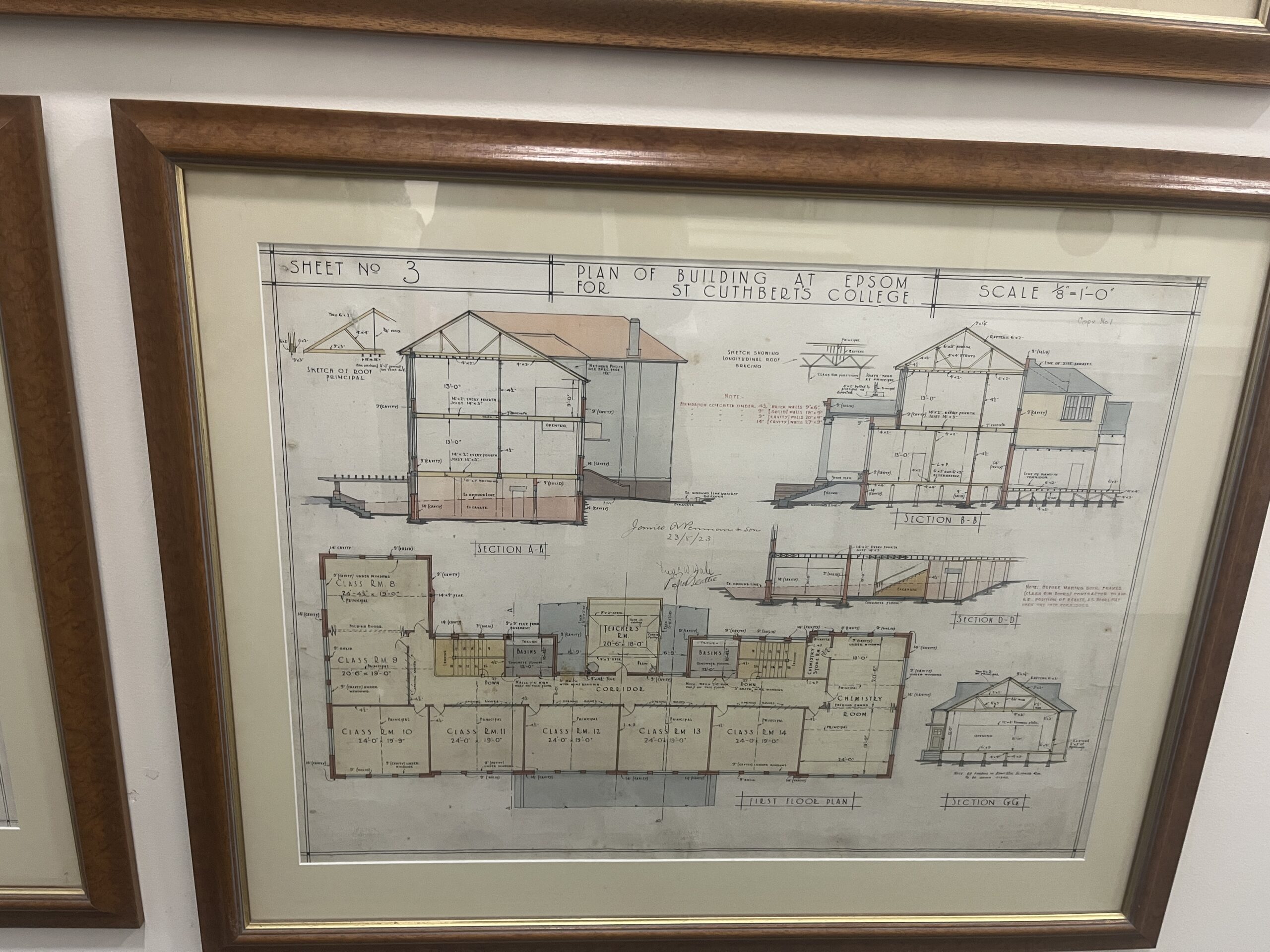
St Cuthbert's drawings
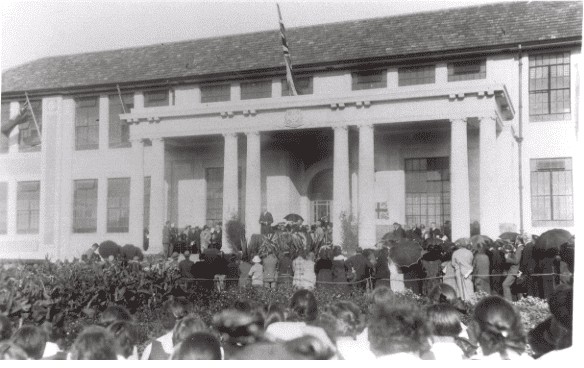
Opening of Robertson Building 1925
The main school building is known as the Robertson Building, which was officially opened on 28 April 1925. The new college consisted of the Main Building, Elgin, Dunblane and Melrose Boarding Hostels, the Refectory or Dining Room, along with several ancillary buildings that had been moved from the Stokes Road Mt Eden campus. All were officially opened on 28 April 1925 by the Governor General, Sir Charles Fergusson, with the Mayor of Auckland, Sir James Gunson. There was an extensive asphalt play area, seven tennis courts, a hockey field, several basketball courts and cricket grounds.
The Main Building had 18 classrooms and was designed to accommodate 450 students with a science laboratory and a domestic science room with electric stoves. The roll is now 1650 girls. Architects Holman and Moses paid special attention to heating and ventilation in the building’s design, incorporating large windows that lit and ventilated the classrooms. There are also drawings by notable architects Gummer and Ford on display in the atrium. The portico columns were removed a few years ago as they were not earthquake-proof.
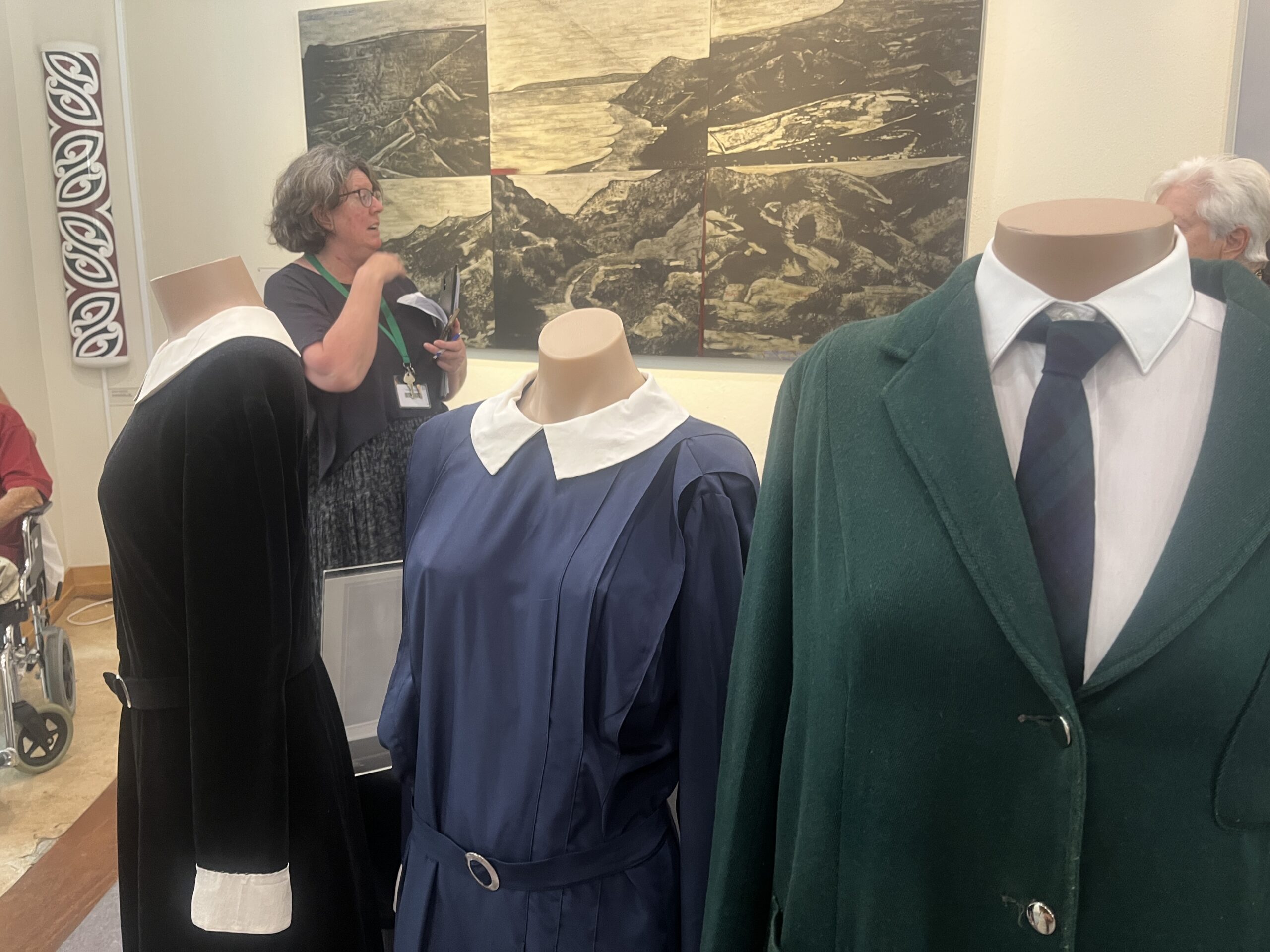
Atrium Foyer with a display of former uniforms
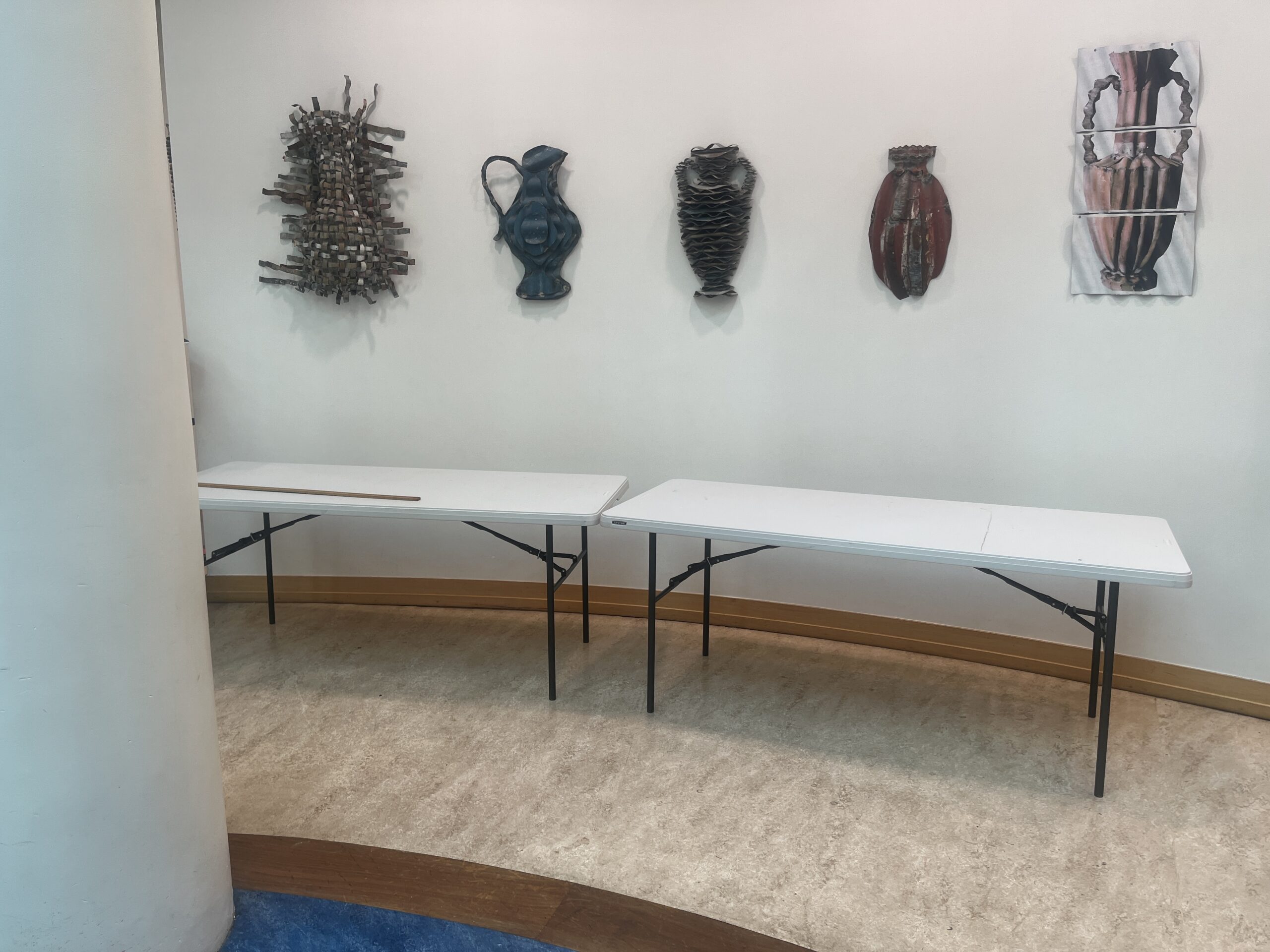
St Cuthbert's Atrium artworks

Greer Twiss sculpture Empire Cartage Co, commonly referred to as Queen Victoria
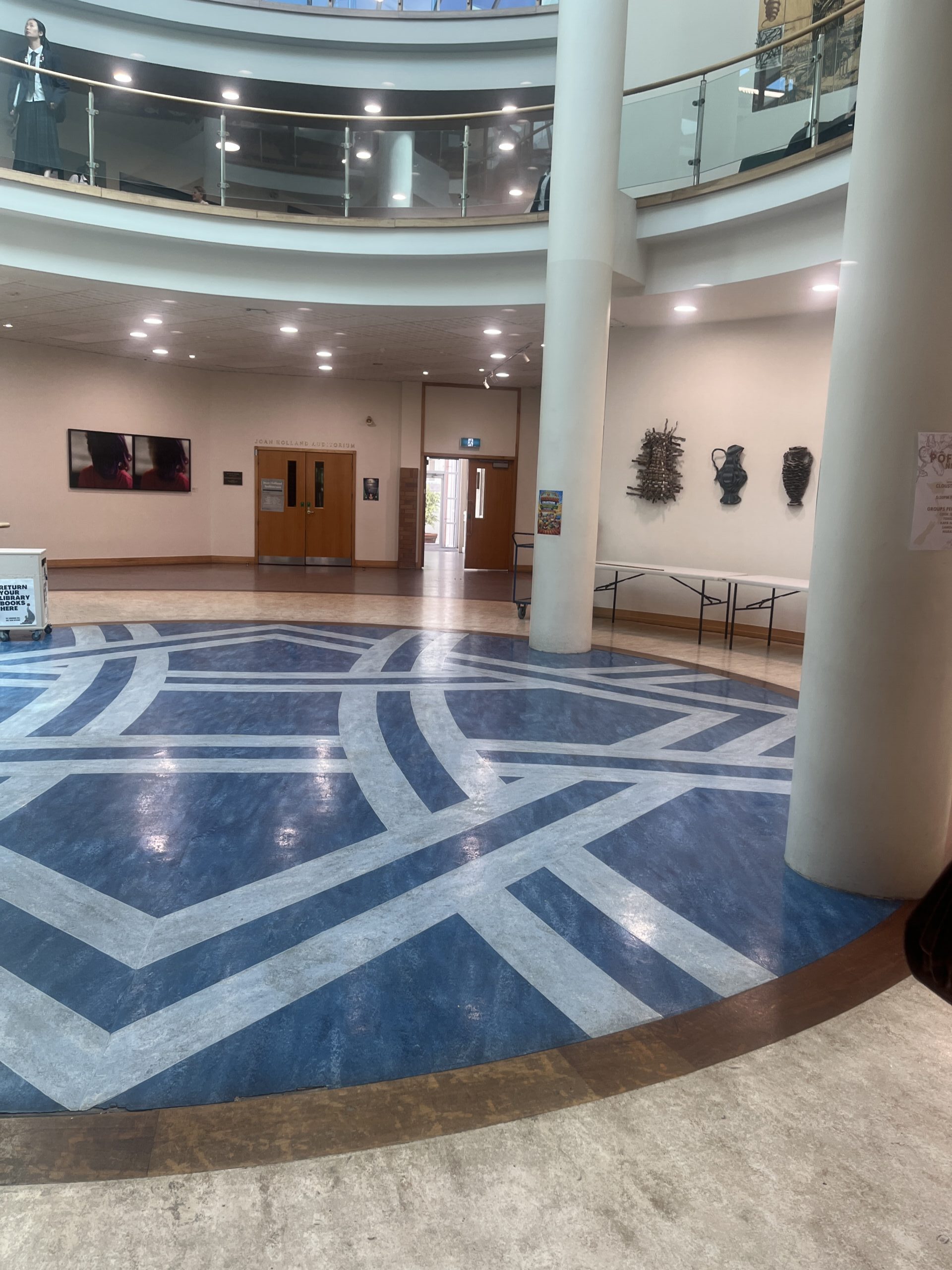
St Cuthbert's Atrium Foyer
The Atrium Foyer was opened on 27 February 1998, built to the design of Warren and Mahoney, the Information Centre links the Robertson, Jean Hunter, Link and Rhodes buildings as well as Clouston Hall. It includes the Joan Holland Auditorium and the Frances Crompton Senior Library, named after Principal Frances Compton 1989-1996. The Atrium includes many works from the College’s art collection, including a sculpture by Greer Twiss- Empire Cartage Co, more commonly referred to as ‘Queen Victoria’.
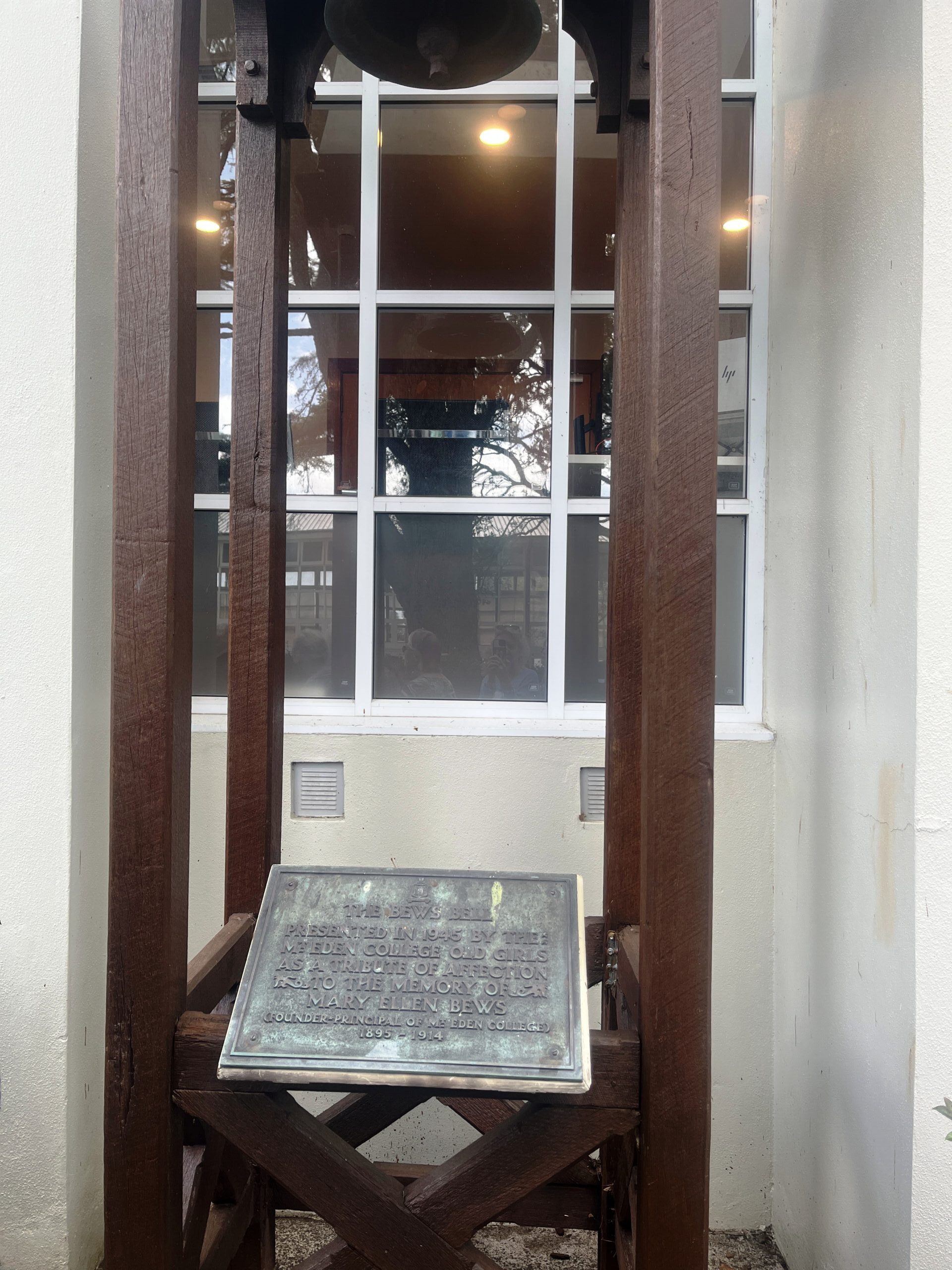
St Cuthbert's Bews Bell
The Bews Bell and memorial plate were donated by the Mt Eden College Old Girls’ Association in memory of Mary Ellen Bews and Alice Lindsay Bews of Mt Eden College. Originally, it hung outside the school library until it was installed in front of Clouston Hall in 1958, under its own belfry, affectionately known as ‘The Gallows’. Each year, as a tradition, Year 13 Leavers ring the Bell on their last day.
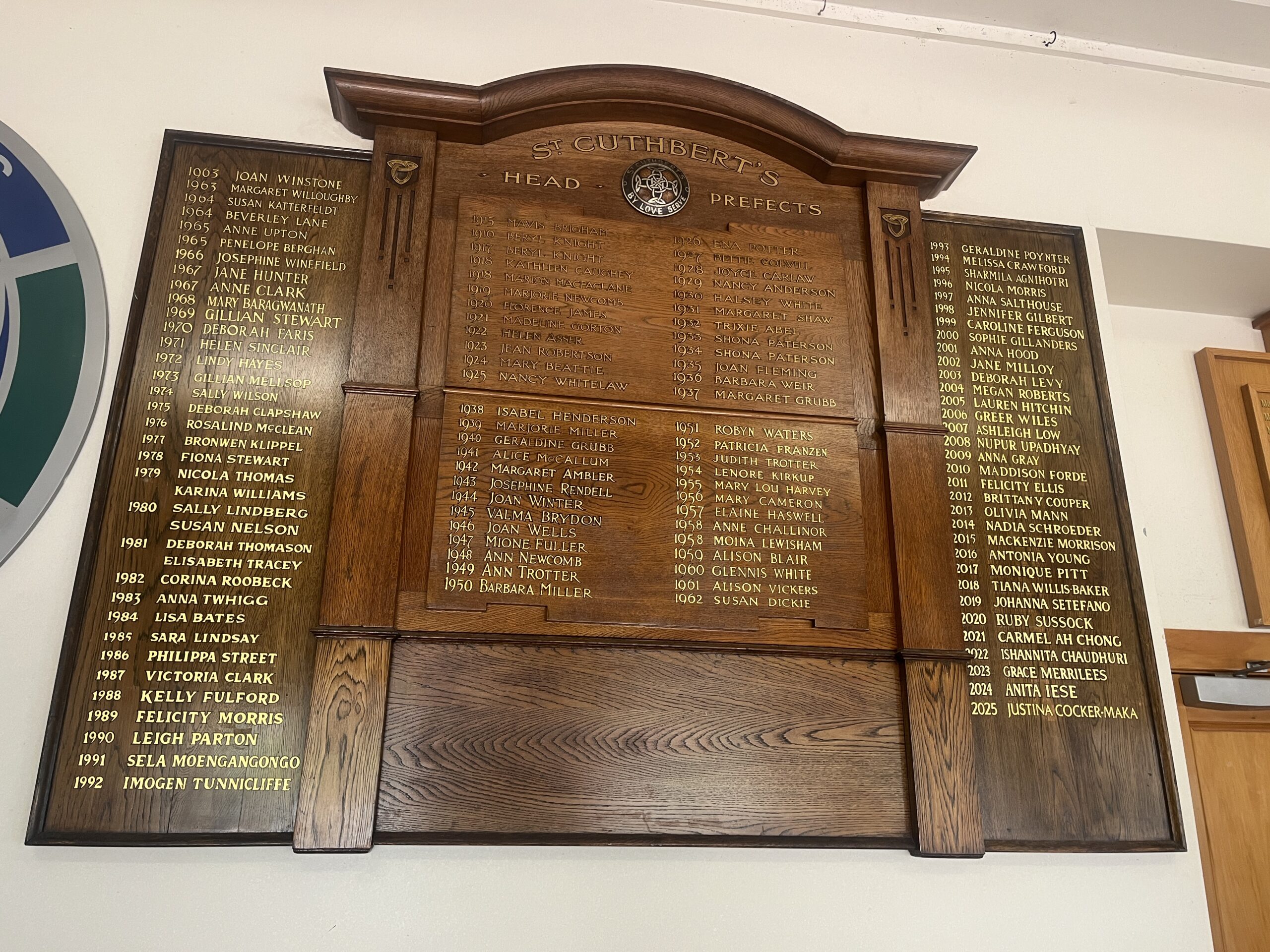
St Cuthbert's Head Prefects Board
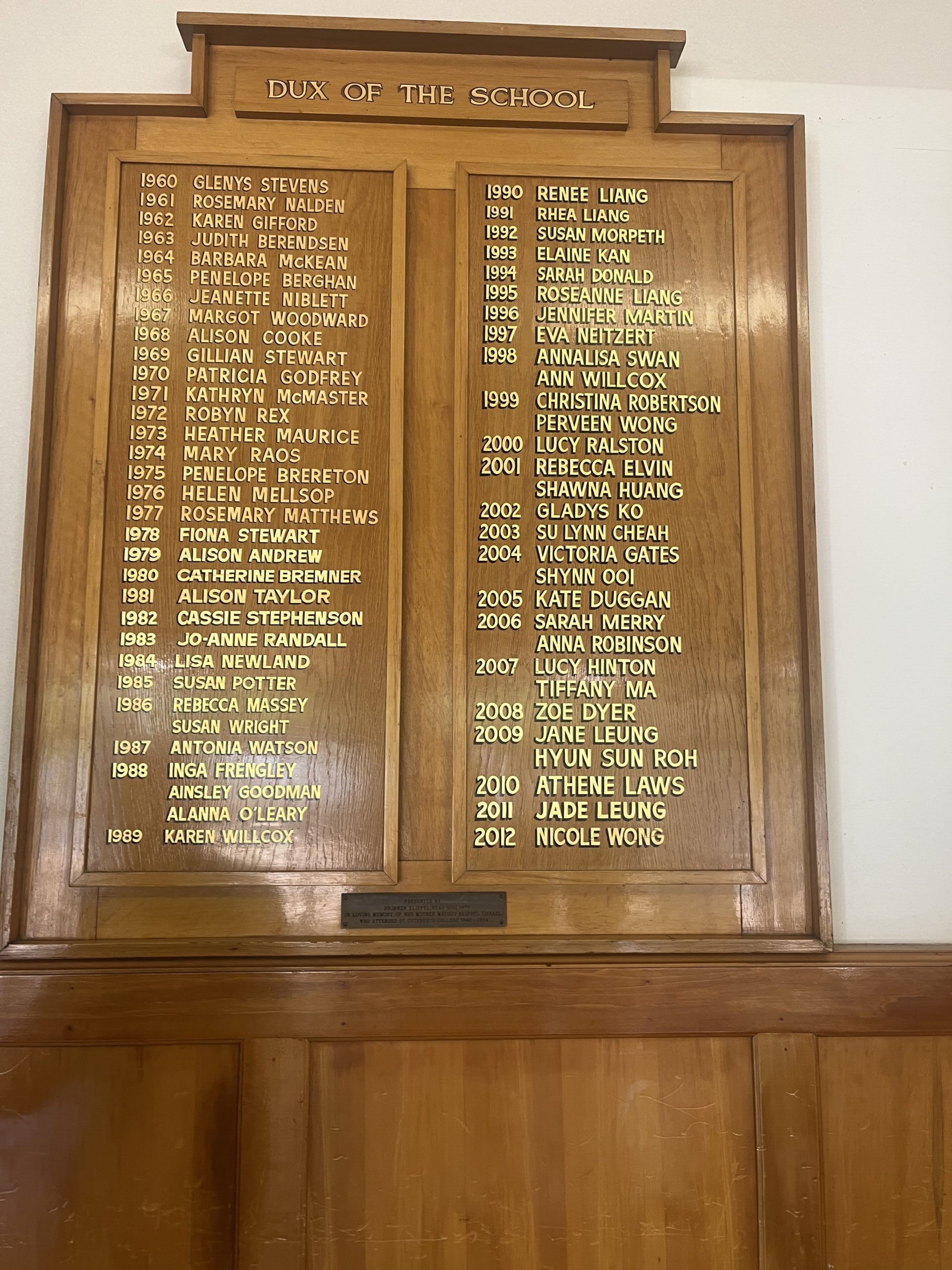
St Cuthbert's Dux of the School Board
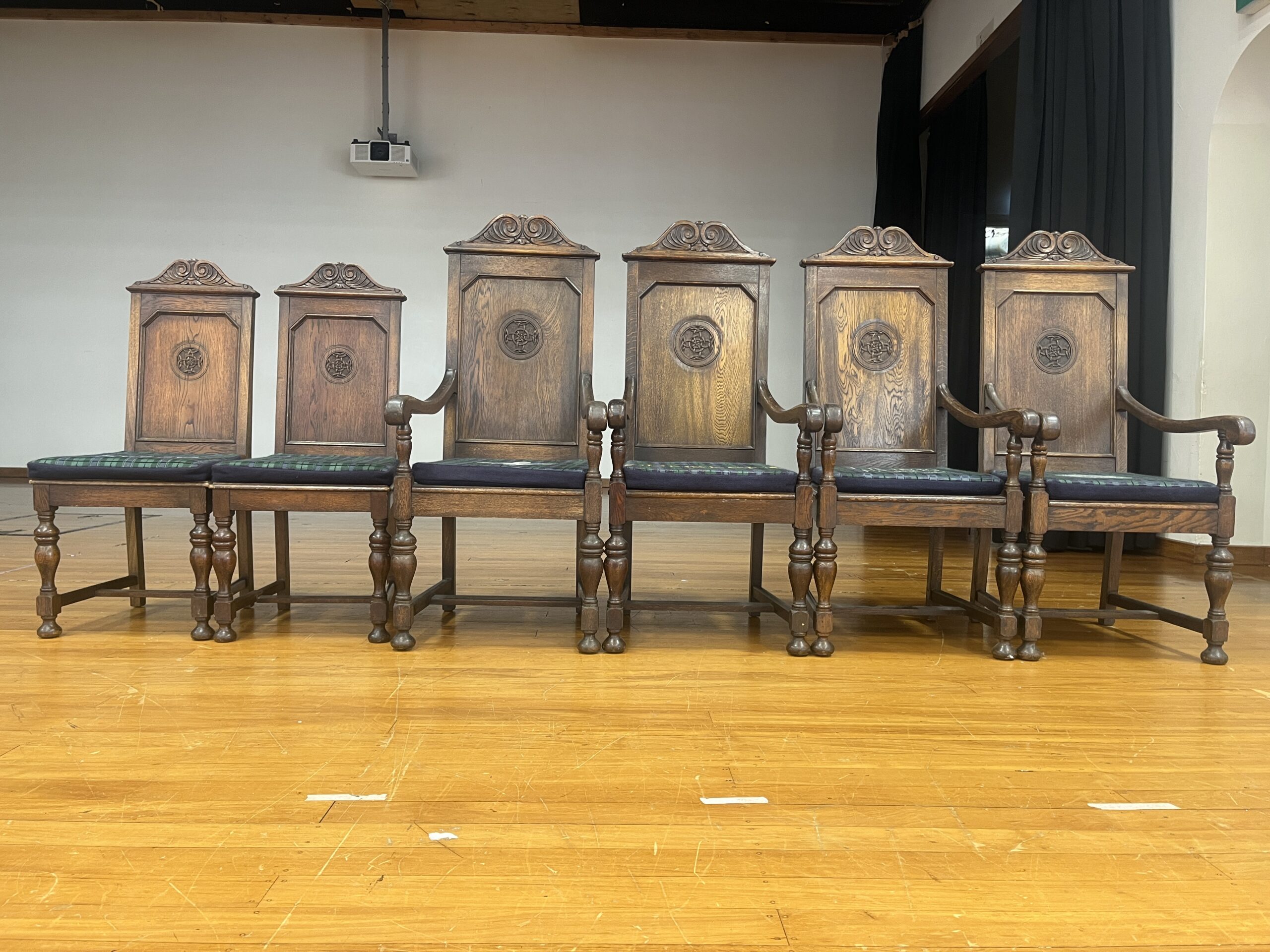
St Cuths Clouston Hall
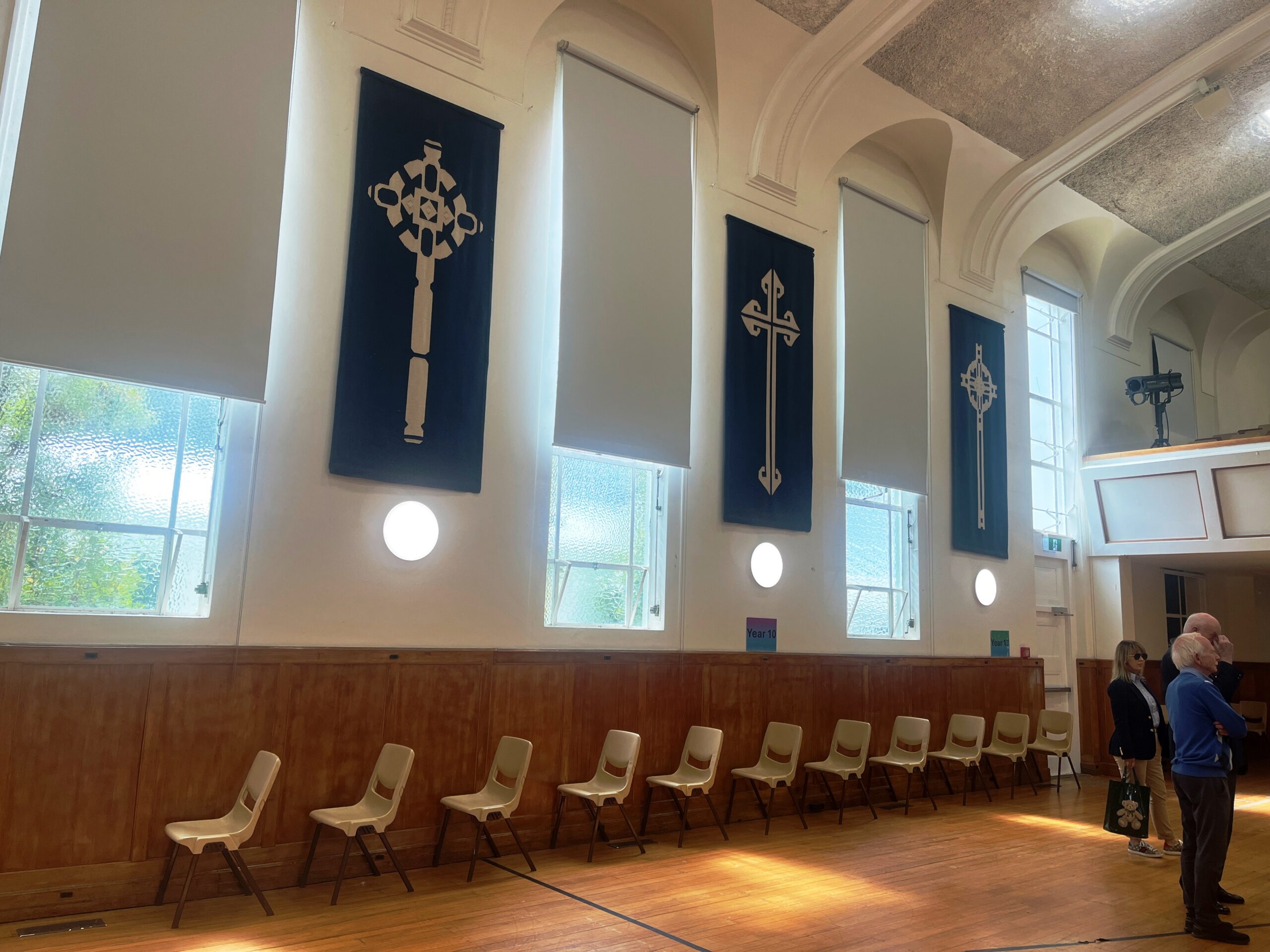
St Cuthbert's Clouston Hall with banners
Clouston Hall
Opened on 14 December 1955 by and named after Miss Lavinia Clouston, who was principal from 1921-1948. The Hall was dedicated to hold services before the Chapel was built in 1993. In 1990, a mezzanine floor was added, the foyer was enlarged, and it included a room for the Trust Board. Pictured below is the first school assembly held in the new Clouston Hall, 1955.
In 1990, 6th Form practical art class designed banners which reflected their interpretation and development of a theme surrounding the Celtic Cross. These cross forms are the basis of the crest of St Cuthbert’s College, itself a unique blend of the ancient Iona Cross and the Cross of St Cuthbert. The students produced six banners, in three pairs, on the theme of Celtic Cross with a Pacific influence, as well as the Celtic Cross and the College Crest. The Trust Board decided to use the theme and create a collection of permanent banners for Clouston Hall to commemorate the 75th Jubilee of the College. Weaver, Ian Spalding, was commissioned to design and weave the banners, which were installed in 1992.
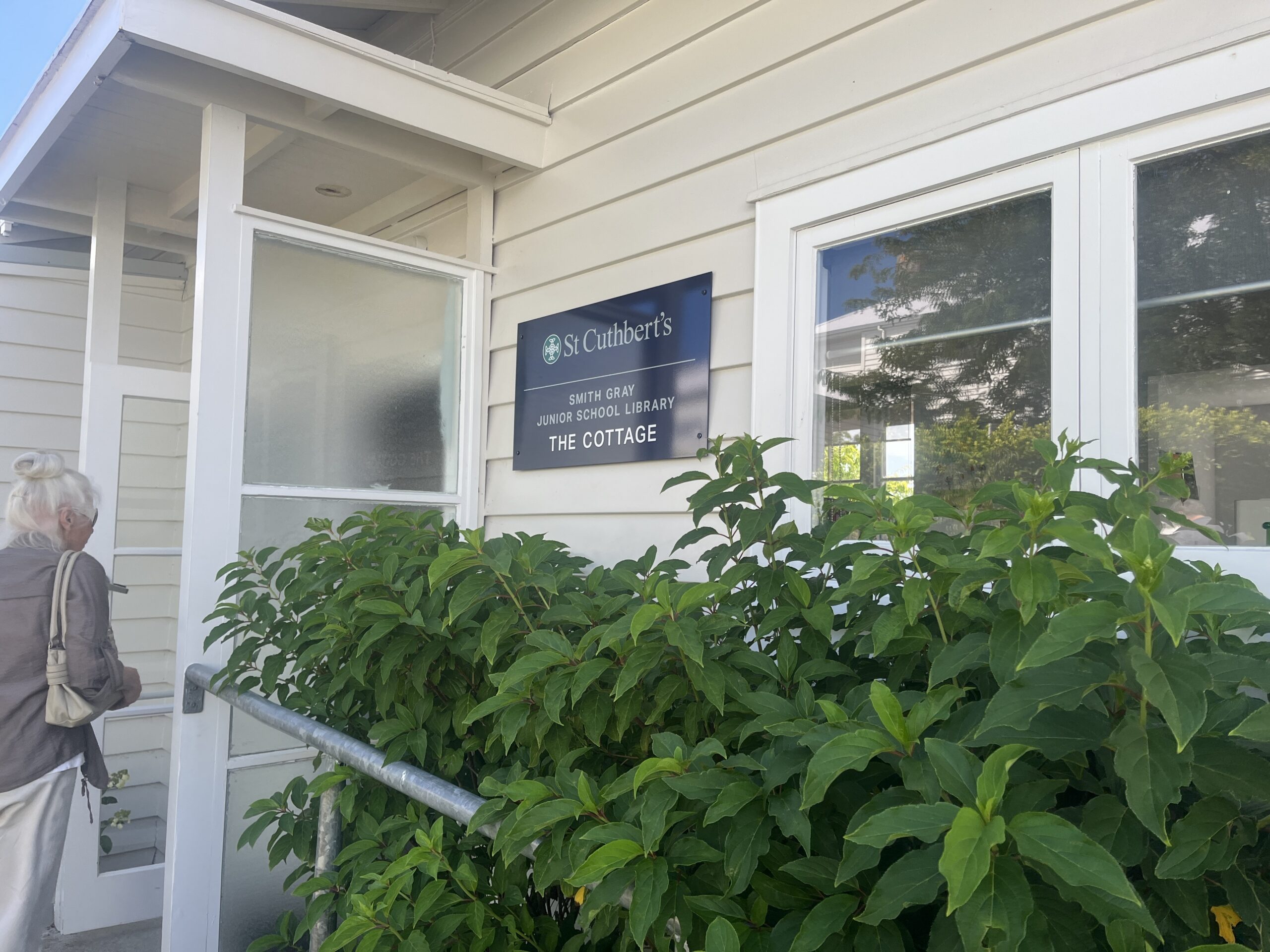
St Cuthbert's The Cottage Junior Library
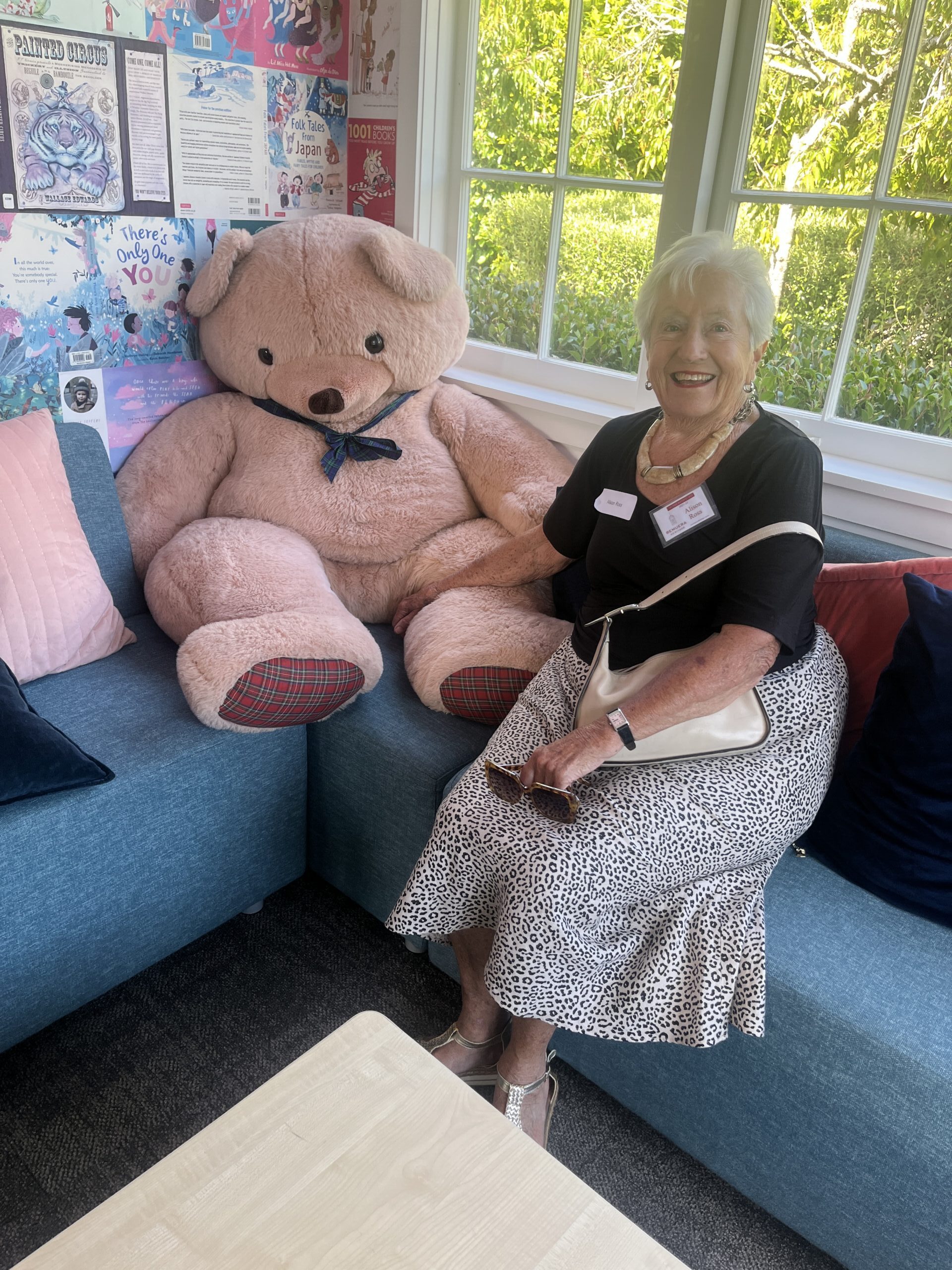
St Cuthbert's The Cottage Junior Library with Big Ted
The Cottage
The Cottage was originally part of the classrooms known as The Upper School at Stokes Road, Mt Eden. It appears on a 1924 plan for the portion of classroom which was being moved to Market Road to become a “proposed cottage for the grounds man”. Known as The Cottage since 2001, it has been a residence for GAP tutors, a learning centre, used for Junior School reception classes and most recently the Junior School Library.
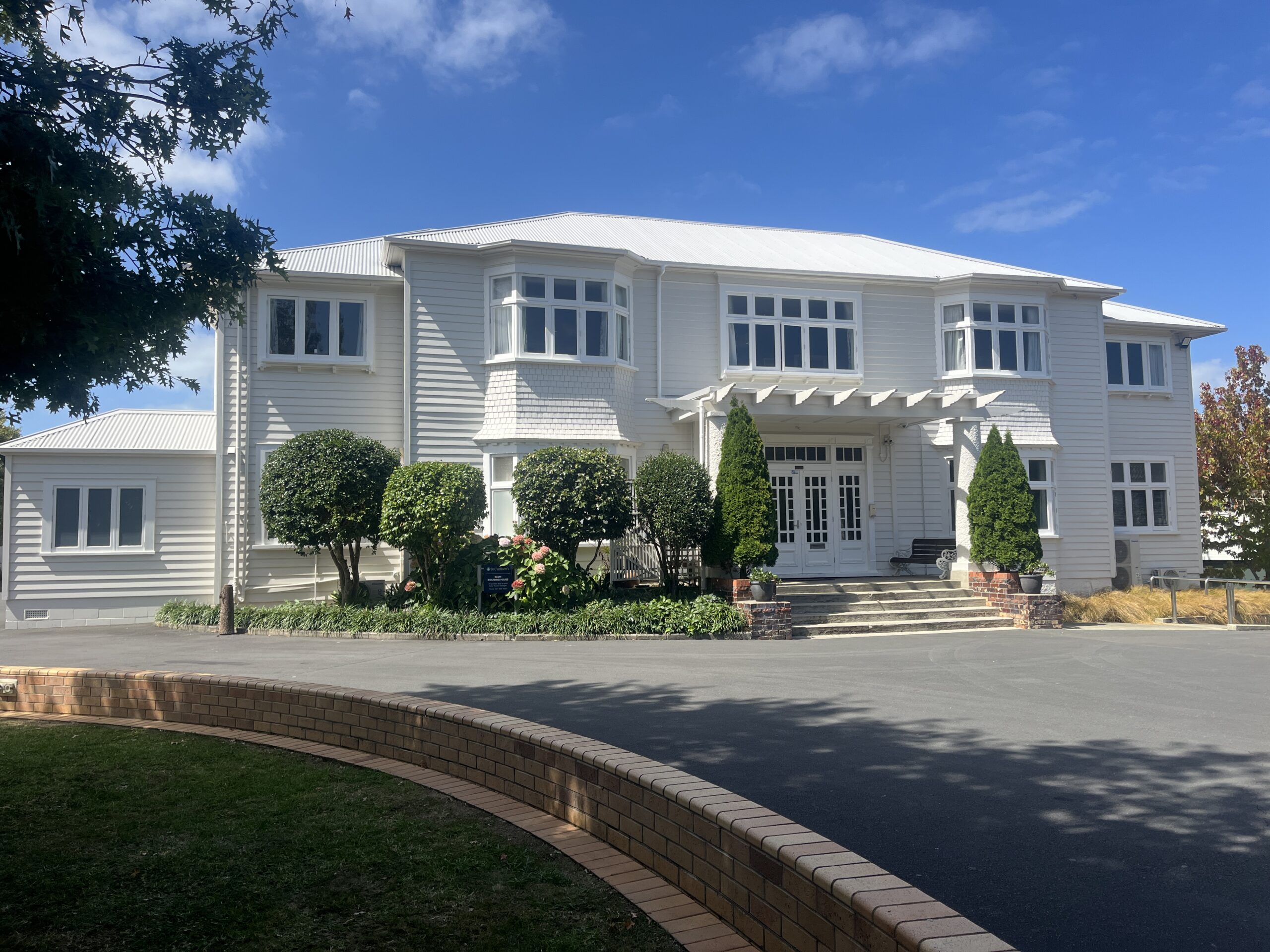
St Cuthbert's Boarding Hostel - Elgin
Boarding hostels
In 1925, Elgin and Dunblane were new purpose-built boarding hostels for junior and middle school boarders. The third hostel, Melrose, was a grand house on the McCrystal property that the Trust Board had purchased in 1923. Its origins dated back to 1874 when it was the home of Major Nelson George and known as “Wapiti.” Architect VL Moses drew up plans to repurpose it for boarding for senior girls with accommodation for the principal. In 1986 Melrose was demolished, and a new hostel facility, also called Melrose was opened in 1987.

St Cuthbert's Dining Hall
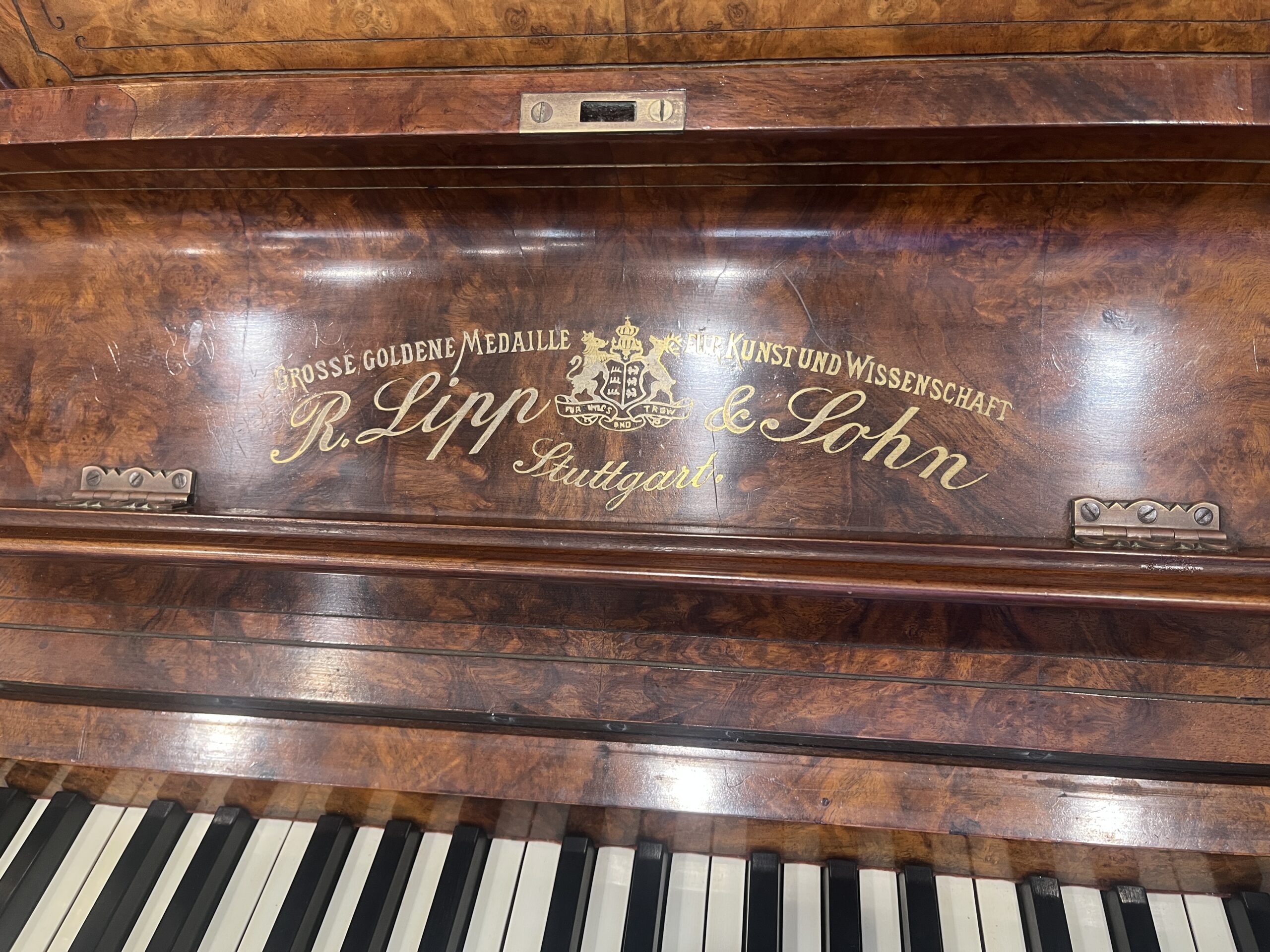
St Cuthbert's Dining Hall R Lipp & John piano from Stuttgart
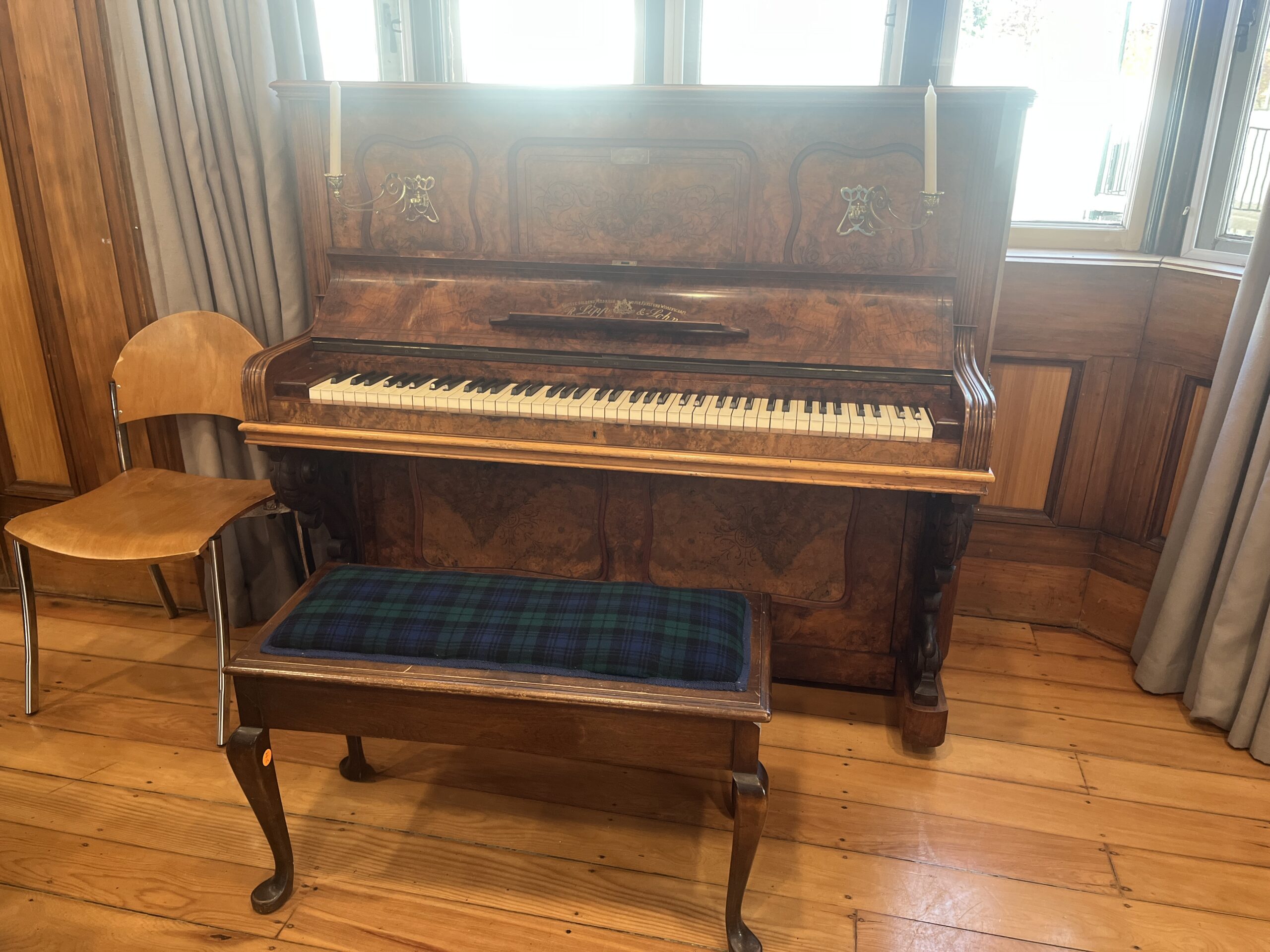
St Cuthbert's Dining Hall Piano with black watch tartan stool
The Violet Wood Dining Hall
The Refectory included a spacious dining hall, which could accommodate 150 pupils, a kitchen, and domestic quarters to the rear. In 1925, the dining room was reported in the Auckland Star to be “a fine room, with panelled walls, dark-stained floor, and a big open fireplace.”. In 1991 alterations were made to the Dining Hall and it reopened as the Violet Wood Dining Hall, in memory of Principal Miss Violet Wood, 1949-1968.
The dining hall has the 1895 Bews Piano which was presented to the college by the Bews Family in 1979. It was made in Stuttgart by Lipp & John and has a piano stool covered in the Black Watch tartan.
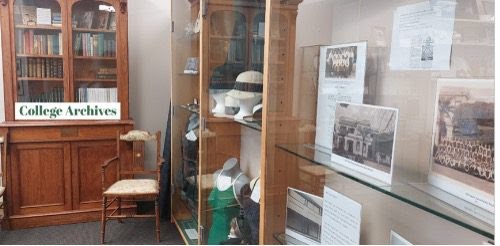
College Archives
The College Archives
The Archive was established in 1987 to collect and maintain a comprehensive historic record of the life of the College since 1915. This rich collection includes photographs, audio visual material, school magazines, uniforms, files, correspondence, building plans, oral histories and more. The purpose-built Archive Room and Collection Store opened in 1999 and is located in the Frances Compton Library, upstairs in the Information Centre.

 Share
Share 
 Email
Email