History of New Zealand Liberation Museum Te Arawhata, Le Quesnoy in France and New Zealand
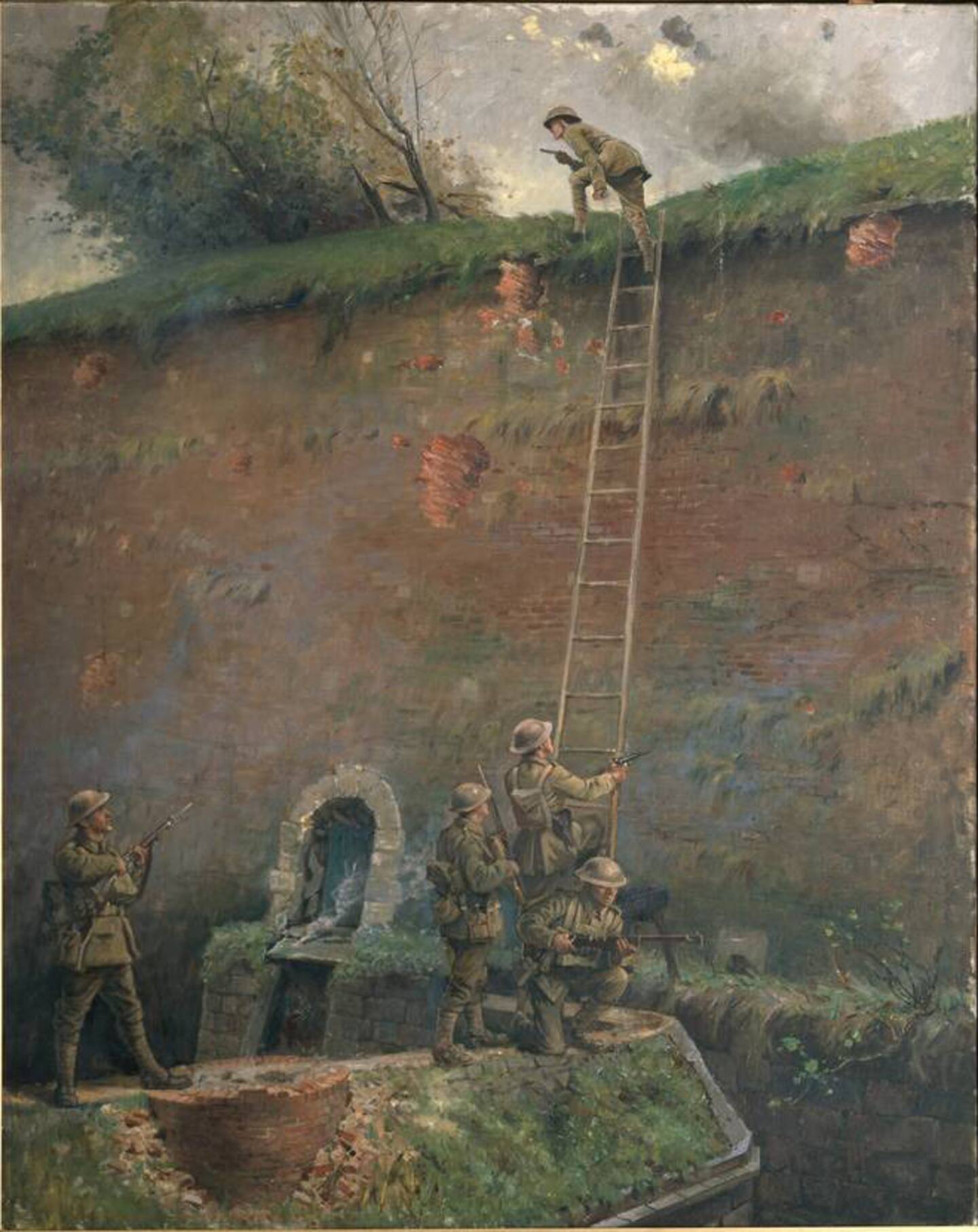

he 1920 painting shows Second Lieutenant Leslie Averill first to climb the ladder to start the liberation of the town., by George Butler. Image- Archives New Zealand
After four long years of German occupation, on the 4th of November 1918, the citizens of Le Quesnoy were finally freed by New Zealand soldiers. See the display in the Remuera Library for Anzac Day 2026.
The liberation of the walled town by ladder was a feat so unusual it even made the New York Times.
The New Zealanders did not fire over the ramparts and thereby preserved civilian lives within the town. While there was New Zealand loss of life while fighting for the freedom of the French, not one citizen of the town died in the battle.
The walls of Le Quesnoy could have been quickly reduced to rubble by heavy artillery but that was not the plan. To ensure the least amount of damage to the town and potential loss of residents’ lives, the day dawned with the New Zealand soldiers firing 500 flaming oil drums onto the ramparts of the western walls to create a thick smoke screen which allowed the New Zealanders some cover from the German forces.
By 9am the town was surrounded by the New Zealand Rifle Brigade. Undeterred, the German occupiers stayed in the town, with no intention to surrender.
The New Zealanders moved closer to the innermost wall of the town during the morning, but soon realised their ladders were going to be too short to scale the huge, final 13-metre sheer brick wall.
A group of men got close enough to the wall to identify one place that offered a chance. Here, on a narrow ledge higher up from the moat floor, a ladder could be placed to reach the top of the wall. At around midday, a group of soldiers got close enough to the inner wall to attempt placing four long ladders against the ramparts to scale the walls.
At 4pm, a chance presented itself and the one remaining ladder was set up on the narrow ledge. It did indeed reach the top. Under the cover of intense rifle fire, Second Lieutenant Averill, followed by Second Lieutenant Kerr and his platoon, climbed the ladder and were quickly over the top and into the town. After exchanging shots with fleeing Germans, the New Zealanders entered the town – some up this same ladder and very soon after, many others through different entry points in the town. Some 2,000 German soldiers surrendered and the c.1,600 French occupants in the town were liberated without the loss of a single civilian life.
The people of Le Quesnoy were overjoyed and came out from hiding to excitedly greet their liberators. Cheering, they embraced them, offered food, and showered them with autumn flowers, before they patriotically flew the Tricolour from their buildings. Salvation had been delivered, not by the English they had expected, but from men who had come from the uttermost ends of the earth.
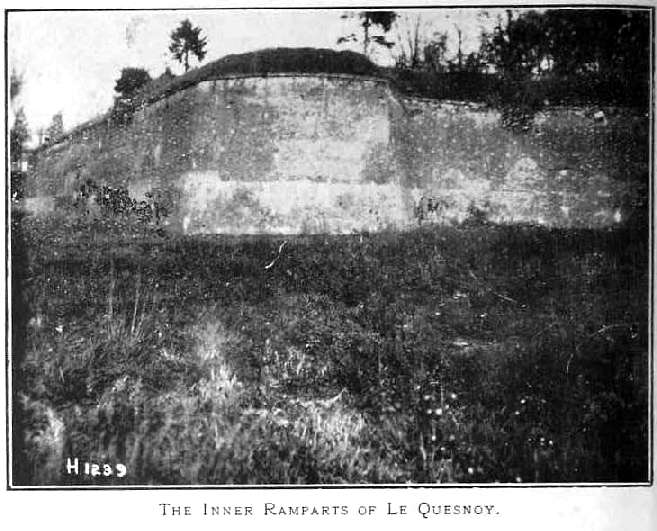
Inner Ramparts at Le Quesnoy WH1-NZRiP054a.
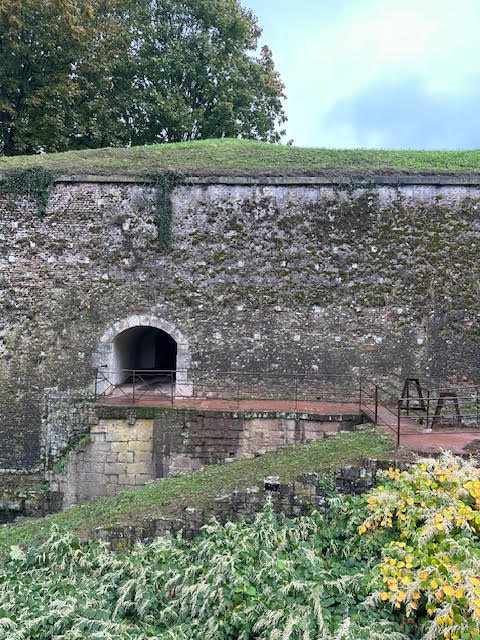
The liberation of Le Quesnoy – The New Zealand Division’s most successful day.
The capture of the French town of Le Quesnoy by the New Zealand Division on 4 November 1918 has special significance in New Zealand’s military history. This is not merely because it was the last major action by the New Zealanders in the Great War – the armistice followed a week later – but also because of the particular way it was captured.
When the New Zealand Division attacked on 4 November, its units quickly by-passed Le Quesnoy and pushed further east on what was to be the New Zealanders’ most successful day of the whole campaign on the Western Front. It advanced 10 kilometres and captured 2000 Germans and 60 field guns. The day’s action cost the lives of about 140 New Zealand soldiers– virtually the last of the 12,483 who fell on the Western Front between 1916 and 1918. Of these 140, about 80 were men of the 3rd New Zealand (Rifle) Brigade who led the assault on Le Quesnoy.
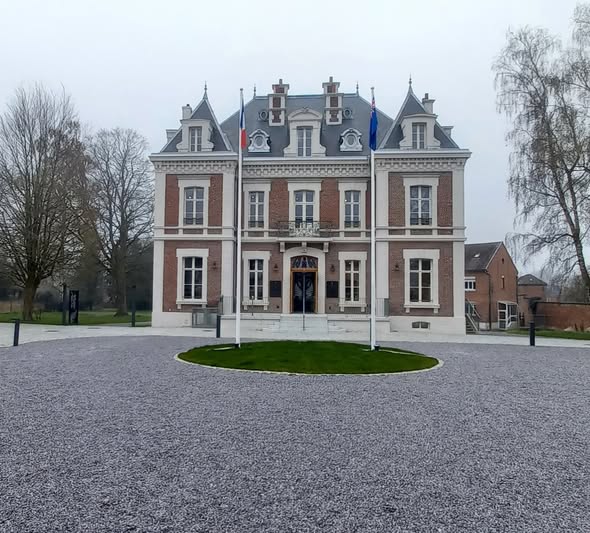
NZ Liberation Museum Te Arawhata, Le Quesnoy, France
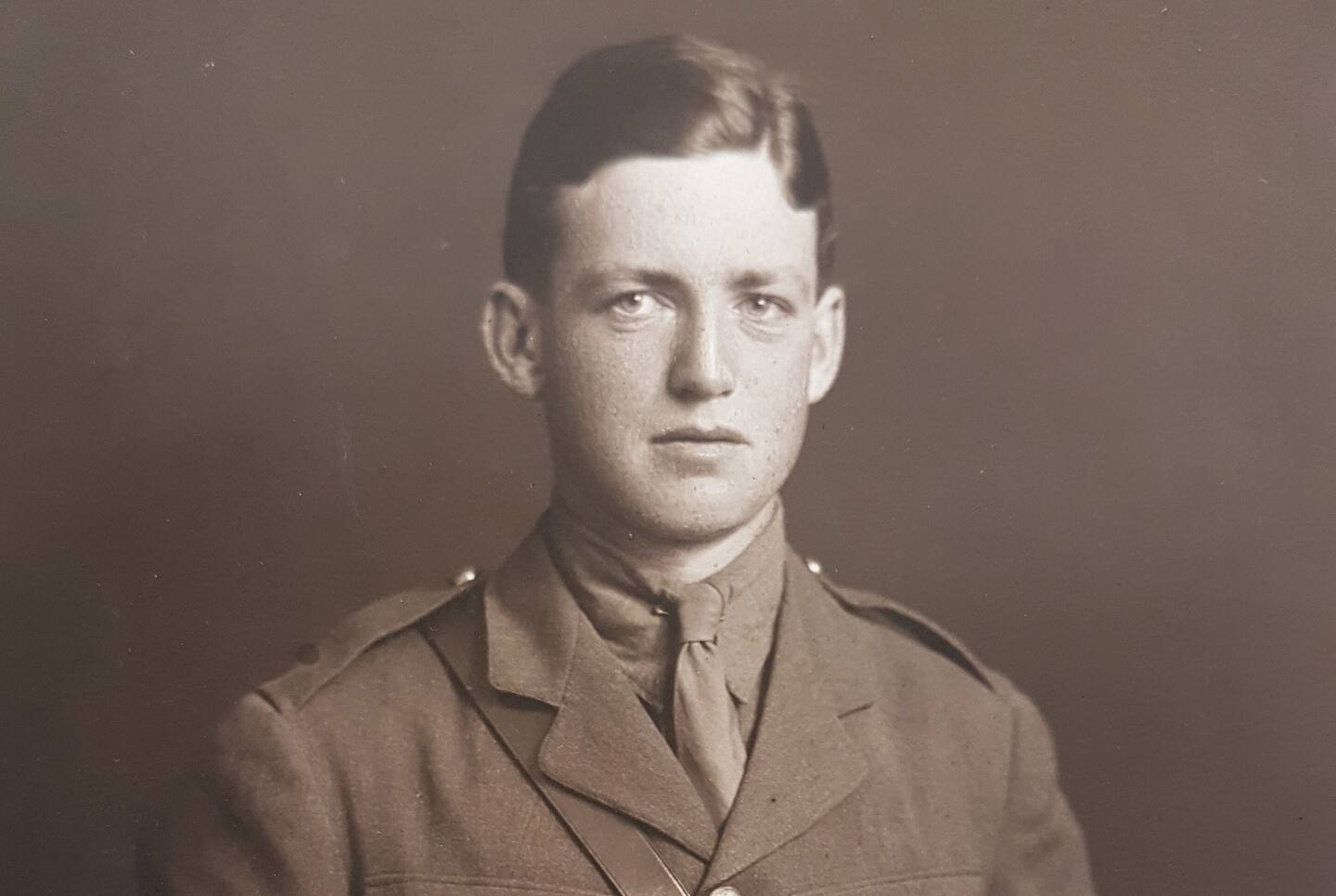
Leslie Averill was the first man to go over the wall at Le Quesnoy in November 1918. Photo-Averill Family Collection
The spectacular attack on Le Quesnoy
Le Quesnoy was an old fortress town occupying a strategic position in northeastern France. It had been in German hands since 1914, and there were several thousand German troops still in the town when it was captured by the New Zealanders. The walls of Le Quesnoy could have been quickly reduced by heavy artillery, but there was no plan to mount such an assault on the town. Instead, several battalions of the 3rd New Zealand (Rifle) Brigade were given the task of masking the forces in the town.
Their orders did not emphasise an immediate assault on the town, but the New Zealand troops were determined to capture it. There was a little competition between the 2nd and 4th Battalions; the former advanced on the town in the direction of the Valenciennes Gate, and the latter pressed forward from the west. The German defenders were demoralised, but their officers were not prepared to surrender without a fight.
When a section of the 4th Battalion reached the inner walls about midday on 4 November, they had already scaled the complex network of outer ramparts with ladders, supplied by the sappers (or engineers). But due to the height of the inner wall, the riflemen could only position a ladder on a narrow ledge atop a sluice gate. Led by Lieutenant Leslie Averill, the battalion’s intelligence officer, a small group of men quickly climbed up the wall. After exchanging shots with fleeing Germans, the New Zealanders entered the town. The garrison quickly surrendered.
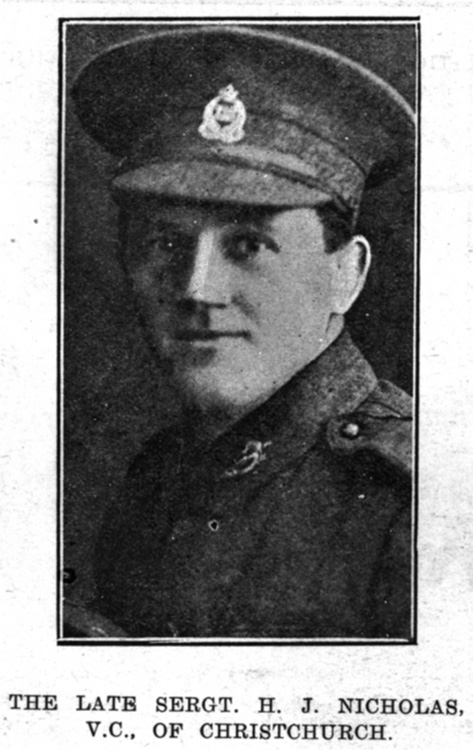
Henry Nicholas Sergeant VC
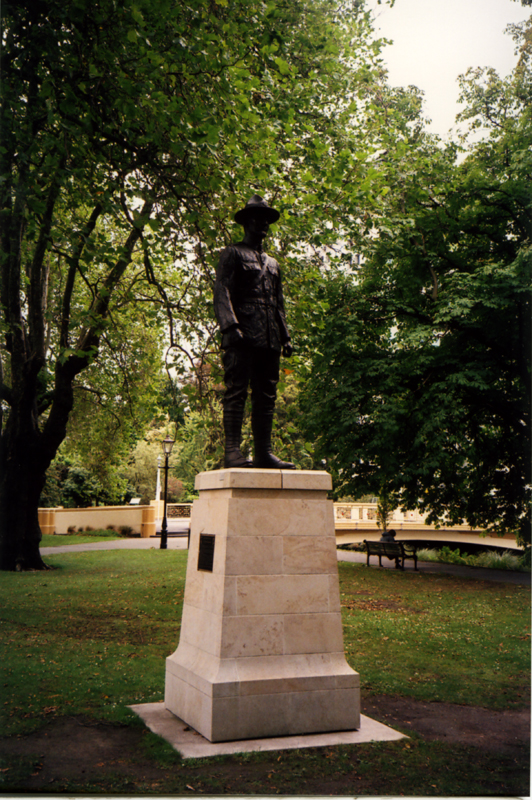
Henry Nicholas VCplaque. Canterbury District Returned and Services Assn on 7 March 2007
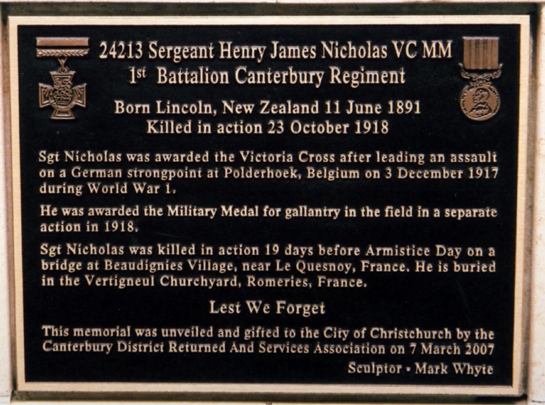
Henry Nicholas Plaque Christchurch
Local appreciation still strong
The medieval-like assault on Le Quesnoy captured the imagination of the townspeople, who were overjoyed at their release from a four-year bondage. Ever since, the town has maintained a strong affinity with New Zealand. So, too, has the nearby village of Beaudignies, which, in 2000, renamed its square ‘Place du Colonel Blyth’ in honour of one of its liberators.
Laurence (Curly) Blyth, a young subaltern in the 3rd New Zealand (Rifle) Brigade, was among the troops involved in the attacks. Although not involved in the actual assault on Le Quesnoy, his battalion advanced in its vicinity. His longevity ensured that he became a symbol of New Zealand’s liberation of the Le Quesnoy area. Along with other surviving veterans of the Western Front, he was made a chevalier de la Légion d’Honneur by France in 1998 and a Member of the New Zealand Order of Merit three years later ‘for services to war veterans and the community’. At the time of his death on 10 October 2001, at the age of 105, Lieutenant-Colonel Blyth was one of the last two remaining veterans of the New Zealand Expeditionary Force.
Henry Nicholas VC
Henry Nicholas – Another New Zealand soldier associated with Beaudignies is Victoria Cross recipient Sergeant Henry James Nicholas, who was killed in action near there on 23 October 1918. He is buried in nearby Vertigneul Churchyard.
A carpenter from Christchurch, Nicholas volunteered for the 1st New Zealand Expeditionary Force in February 1916 and joined the 1st Battalion, Canterbury Regiment on the Western Front in the following September. He earned the Victoria Cross for his part in the New Zealand attack on Polderhoek Chateau on 3 December 1917. He rushed forward, ahead of his section, to destroy a German strongpoint that was inflicting heavy casualties on the advancing troops. He used bombs and a bayonet to overcome the 16-man enemy garrison. He was killed in a skirmish with a German force near Beaudignies.
Le Quesnoy is the site of one of the four New Zealand battlefield memorials on the Western Front (the others are at Gravenstafel and Mesen/Messines in Belgium, and Longueval in France). New Zealand is always officially represented at armistice commemorations in the town on 11 November, and politicians and other groups, including the All Blacks, have often visited. The Captain of the 2000 All Blacks, Todd Blackadder, recalls his own visit : ‘We walked around the town … [to the memorial] and we laid a wreath there. I was standing next to a Frenchman who had tears streaming down his face. He was moved by the generosity of the New Zealanders all those years ago.’
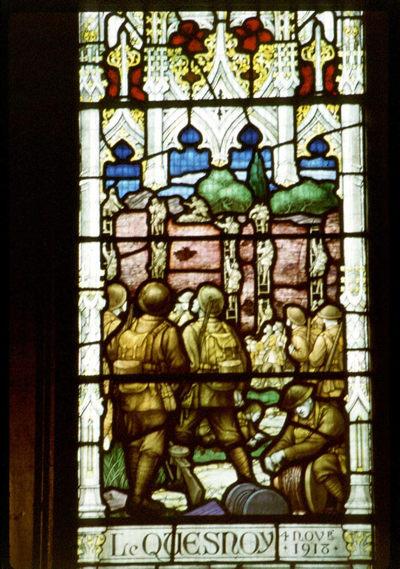
Le Quesnoy 4 Nov 1918- War memorial window at St Andrews Church, Cambridge, NZ.
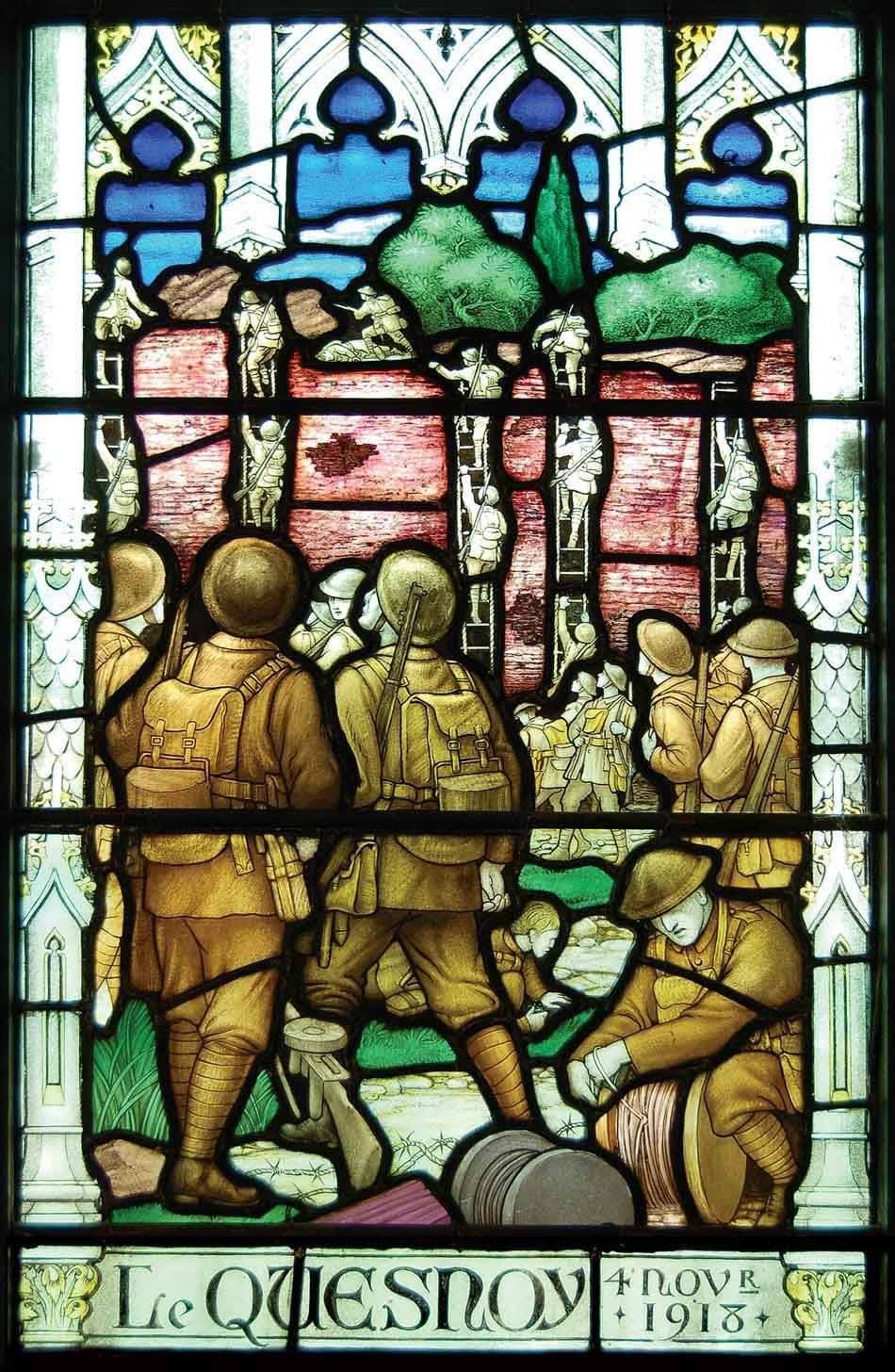
Le Quesnoy window St Andrews Church Cambridge NZ
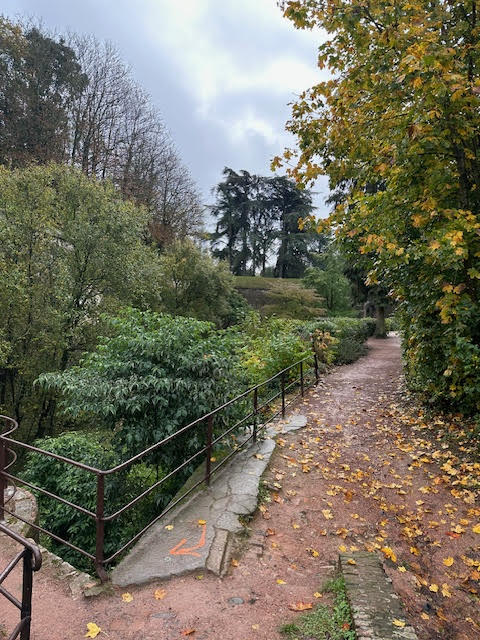
Le Quesnoy gardens G Jackson
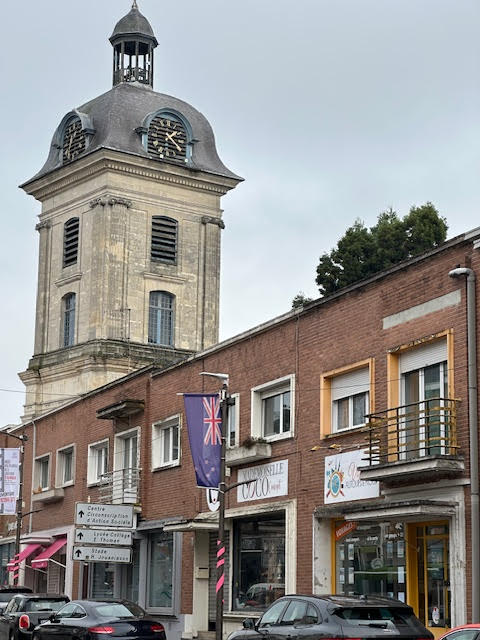
e Quesnoy Shops G Jackson
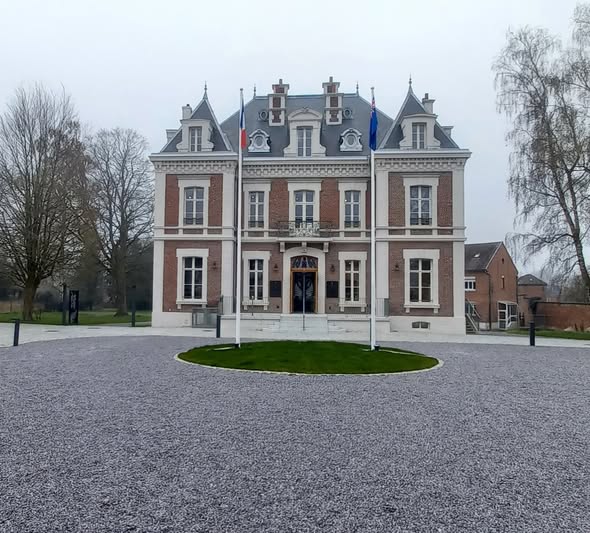
NZ Liberation Museum Te Arawhata
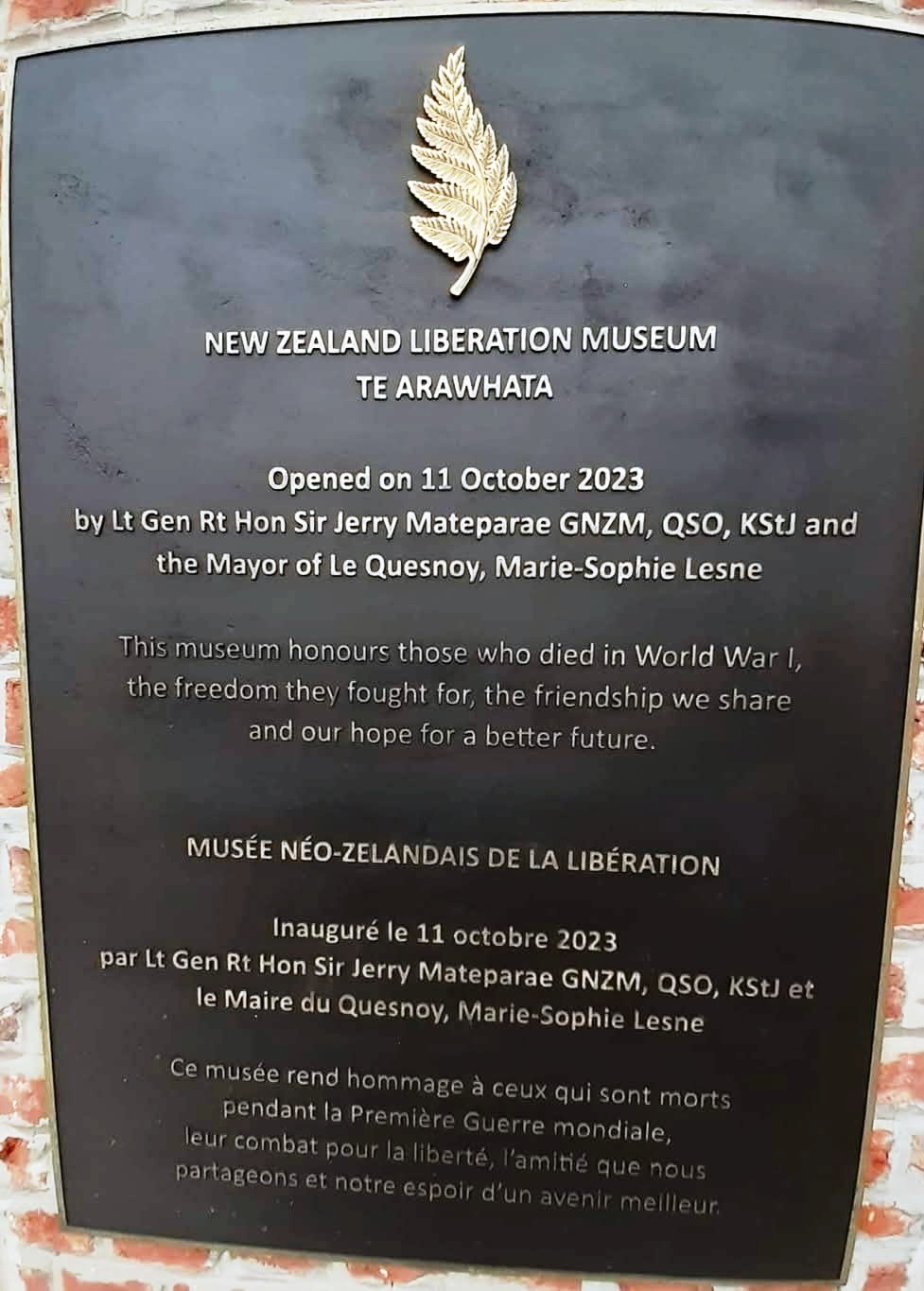
Opening of Te Arawhata 2023
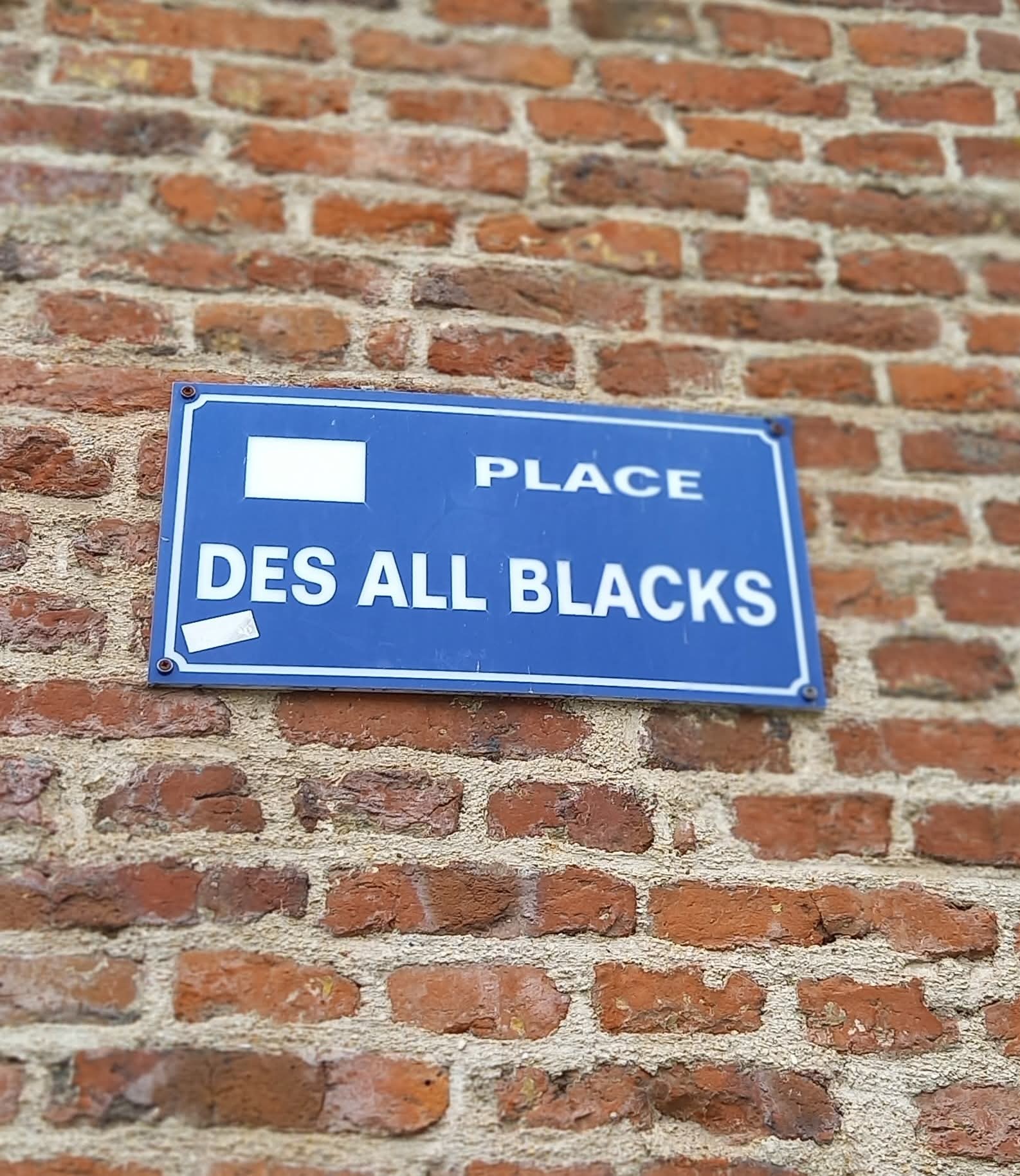
Place Des All Blacks
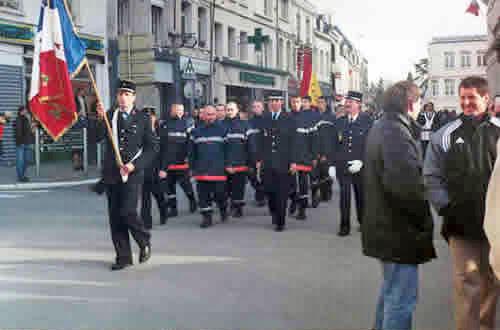
Procession of the NZ Memorial during the Le Quesnoy commemoration with the All Blacks 5 November 2000
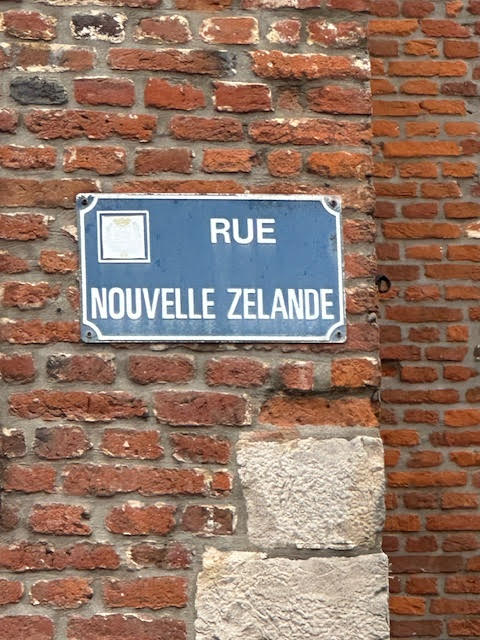
Rue Nouvelle Zelande from G Jackson
New Zealand and Le Quesnoy
To this day, the town of Le Quesnoy continues to mark the important role that New Zealand played in its history. Streets are named after New Zealand places, there is a New Zealand memorial, and a primary school bears the name of a New Zealand soldier. Visiting New Zealanders are sure to receive a warm welcome from the locals.
Le Quesnoy memorial window, Cambridge – This is a detail of the war memorial window in St Andrew’s Church, Cambridge, New Zealand. The image shows New Zealand soldiers scaling the walls at Le Quesnoy. The caption reads ‘Le Quesnoy 4 Nov 1918’. Despite the scene depicted in the window, the New Zealanders only used one ladder to enter the town.
The Germans held Le Quesnoy for almost the entire war, from August 1914 through to its dramatic liberation on 4 November 1918. The New Zealanders scaled a ladder set against the ancient walls of the town and took the remaining Germans as prisoners. The liberation of Le Quesnoy was just one of the many campaigns that New Zealanders fought on the Western Front, the line that stretched across northern France and Belgium. The majority of New Zealanders killed in the First World War lost their lives in the battles that raged there from 1916 to 1918. More than 12,000 New Zealanders died on the Western Front in two and a half years fighting; this was more than in the entire Second World War.
New Zealand and Le Quesnoy, URL: https://nzhistory.govt.nz/page/new-zealand-and-le-quesnoy, (Manatū Taonga — Ministry for Culture and Heritage), updated 10-Sep-2025
Leading off from the town square is the Avenue des Néo-Zélandais, which takes you to the Jardin du Souvenir (Garden of Remembrance). Another street is the Rue Nouvelle Zélande. And the Rue d’Averill is named after Lieutenant Leslie Averill, from the 4th Battalion, 3rd New Zealand (Rifle) Brigade. He was the first of the New Zealand liberating force to enter the town, and he maintained strong ties to it throughout his life. The town’s primary school (l’Ecole du Lieutenant Averill) is also named after him.
It was popularly believed that Averill was born in the New Zealand town of Cambridge. In fact he was born in Christchurch, but nonetheless, Le Quesnoy has been a sister city to Cambridge since 1998.
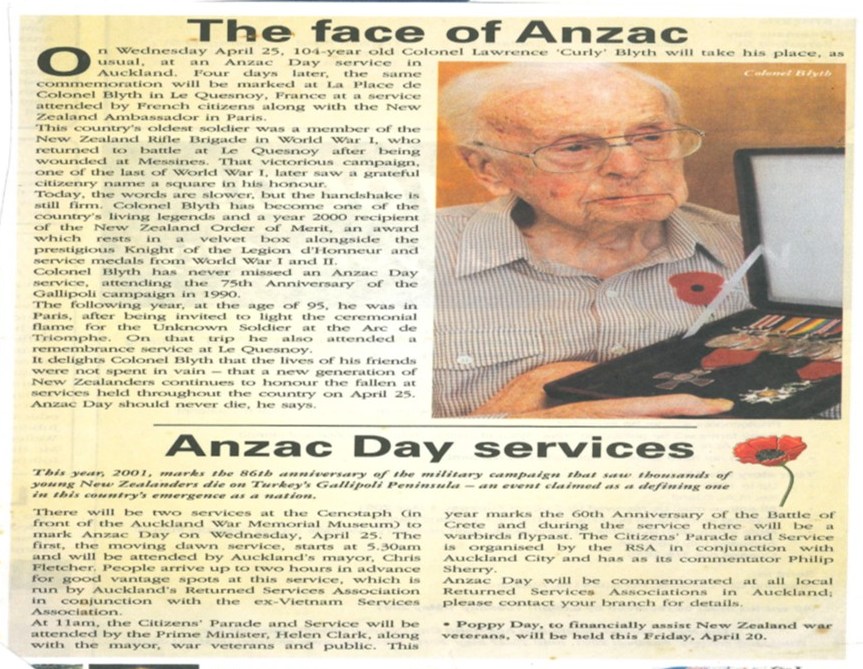
Curly Blyth Anzac Day 2001
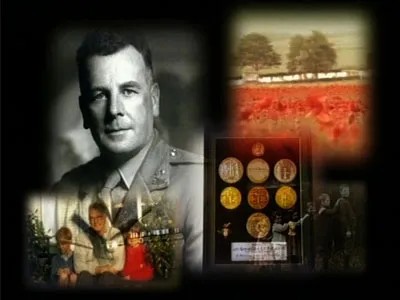
Curly Blyth NZ On Screen
COLONEL LAWRENCE MORRIS BLYTH 1896-2001
Lawrence ‘Curly’ Blyth volunteered for World War 1 despite being underage. In 1916 his rifle brigade was sent to the Western Front, where he fought for 23 days amongst the mud of the Somme. In the final weeks of WW1 Blyth helped liberate the strategic French town of Le Quesnoy from German forces, later winning a French Legion of Honour for his efforts. In this documentary his grandson, director David Blyth, uses interviews and stock footage to chronicle the times at war of his bossy yet personable grandad, who died in 2001, aged 105.
https://www.nzonscreen.com/title/our-oldest-soldier-2002
Our Oldest Soldier. Television (Full Length 7 mins) – 2002
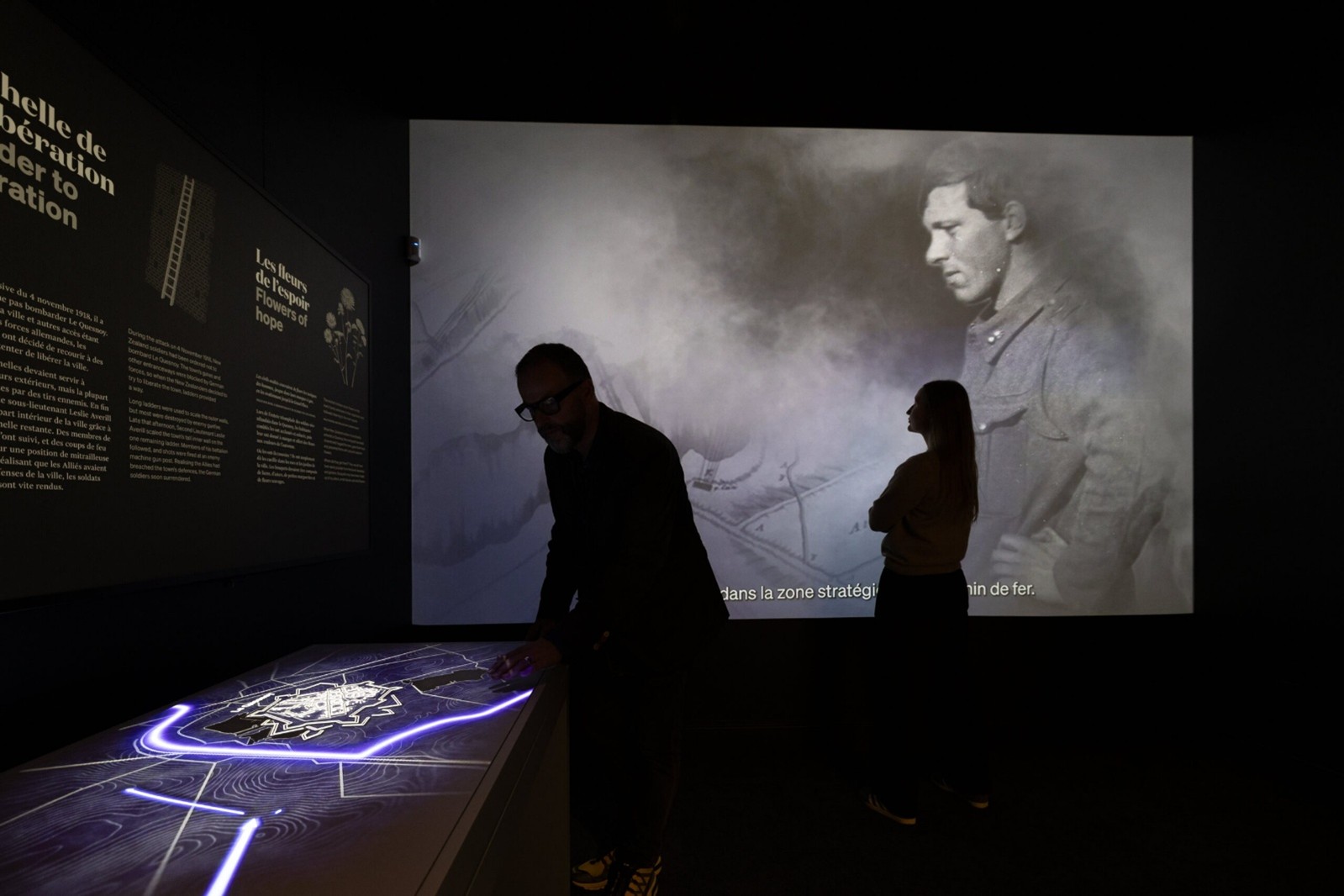
Weta Workshop Room in Te Arawhata
Wētā Workshop Experience
Known for their cinematic approach, Wētā Workshop has crafted an emotive, multi-sensory experience. The museum connects visitors to New Zealand’s involvement in Le Quesnoy’s liberation through dramatic storytelling, sculptural artworks and immersive soundscapes.
Te Arawhata – the ladder is a pathway to higher levels of understanding, and is central to the experience. The ground floor rooms tell the stories, then visitors climb the staircase, symbolically the pathway to higher things, where they reach the rooms which provoke reflection and greater understanding.
Here we see the power of a Te Ao Māori approach. Te Arawhata symbolises the immutable characteristics of the soldiers who climbed it, but also the successive generations – encouraging them, us and those who follow to be ambitious, resilient, determined and courageous.
Upstairs there is a room where visitors can leave messages on the autumn flowers of Le Quesnoy, as they reflect and create their own ever-changing artwork of remembrance. There is also the opportunity to celebrate the remarkable, ongoing friendship between Le Quesnoy and New Zealand. The highly immersive exhibition spaces, where visitors can learn more about the people involved in the liberation and New Zealand’s wider involvement in World War I, are complemented by interactive and contemplative areas where they can also reflect on the price of freedom, the value of friendship and how these can create a better future.
Major celebrations and commemorations take place on Anzac Day every year, in French, English and Te Reo.
Visit the N Z Liberation Museum Te Arawhata here https://nzliberationmuseum.com/

 Share
Share 
 Email
Email 
